
Wake County Court Dockets Defined
A docket is the court's running list of scheduled hearings, filings, orders, and case events. In Wake County, docket information can appear in the North Carolina eCourts Portal, on official court calendar tools, at public self-service terminals, and in the clerk's case record. A calendar tells when a matter is set. A docket also helps show what has happened so far.
Wake County is part of North Carolina's General Court of Justice. Superior Court handles felony cases, civil cases above the state threshold, and appeals from District Court misdemeanors and infractions. District Court handles many misdemeanors, traffic infractions, family matters, juvenile matters, small claims-related work, and lower-dollar civil cases. Magistrates support initial criminal processes, warrants, small claims, marriages, and other statutory duties. Those roles affect which calendar or docket path a user should check.
- Docket
- A chronological list of filings, hearings, and court actions in a case.
- Calendar
- The schedule of hearings or trials for a court session.
- Continuance
- A postponement of a court date.
- Disposition
- The final outcome of a charge, claim, or event.
Search Wake County Court Dockets
For Wake County court dockets, the main online path is Portal's Search Hearings function. The Portal training page states that Search Hearings supports case number, party name, business name, attorney name, attorney bar number, judicial officer, or courtroom. Smart Search is still useful when the user needs to move from a hearing result into broader case information.
- Open the eCourts Portal and choose the hearing or calendar search path rather than starting with a general web search.
- Enter the case number, party name, business name, attorney name, attorney bar number, judicial officer, or courtroom.
- Filter to Wake County or the Wake court location when the option appears.
- Review the date, time, case number, courtroom, judicial officer, and party names before relying on the result.
- Open Smart Search for the related case if the docket event needs context from the case record.
- Call or visit the Clerk of Superior Court if the hearing does not appear or if the result conflicts with a notice.
The image below is from the U.S. District Court for the Eastern District of North Carolina.
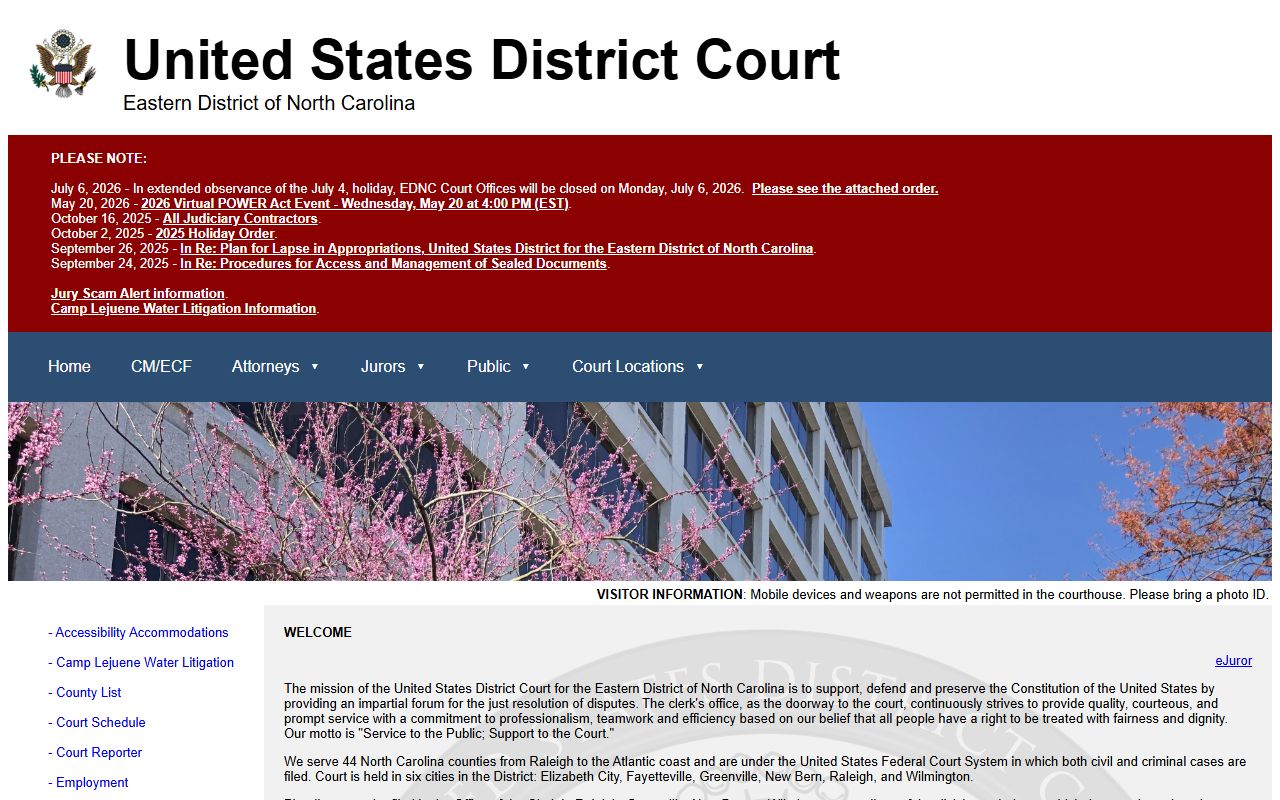
Federal docket sources are separate from Wake County Superior Court and District Court, but Raleigh users may need to know the difference.
Wake County Docket Search Fields
Hearing search is more targeted than a general case search. It asks for values tied to a scheduled court event, then returns calendar information. Courtroom search is especially important for remote hearings because Wake civil superior Webex instructions tell users to check the hearing tab in Portal for the Webex courtroom number.
| Field | Use | Wake County Detail |
|---|---|---|
| Case number | Finds a hearing tied to one file. | Use the exact number from a filing or notice when available. |
| Party or business name | Finds hearings by person or entity. | Compare names against case type and location. |
| Attorney name | Finds matters connected to counsel. | Useful when several cases are on one session calendar. |
| Attorney bar number | Finds hearings by licensed attorney identifier. | Supported by Portal Search Hearings. |
| Judicial officer | Finds calendars by assigned judge or officer. | Best paired with date and location checks. |
| Courtroom | Finds hearings by room or remote courtroom. | Use for Webex courtroom checks when remote hearing instructions apply. |
Wake County Docket Entry Fields
A Wake County docket entry should be read as a case event, not as the entire case file. The docket may show a hearing, filing, order, disposition, or payment-related event. The complete record can include the underlying motion, order, exhibit, transcript request, or certified document that the docket line points toward.
| Field | What It Shows |
|---|---|
| Case number | The Wake court file number tied to the event. |
| Case type | Civil, criminal, traffic, family, estate, judgment, or special proceeding category. |
| Event date | The filing date, hearing date, index date, or docket date. |
| Event type | Motion, order, judgment, continuance, hearing, disposition, or other action. |
| Parties | Names of parties to the action, such as defendant, plaintiff, petitioner, or respondent. |
| Courtroom | Physical courtroom or remote courtroom detail when available. |
| Judicial officer | Judge or officer assigned to the hearing or event when displayed. |
| Disposition comments | Judgment or outcome comments where the Portal module provides them. |
The next image comes from the Eastern District CM/ECF information page.
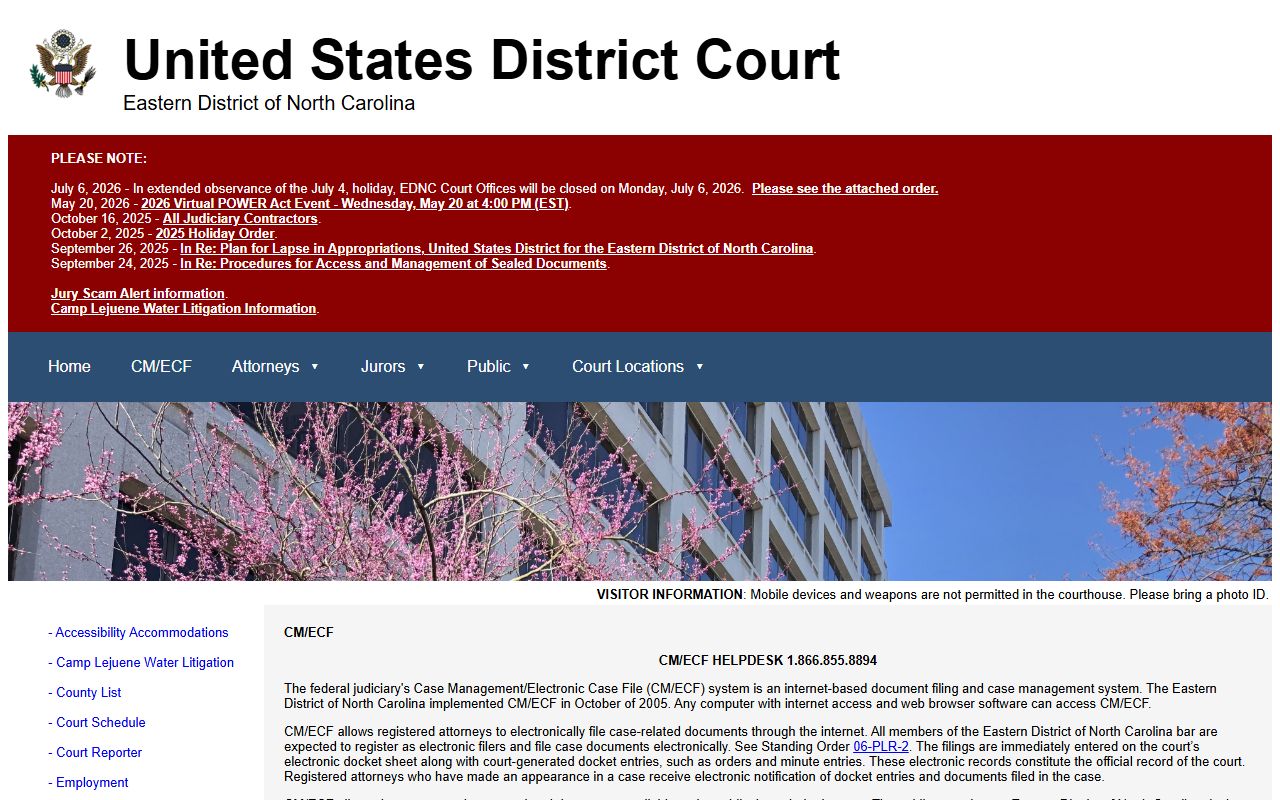
CM/ECF is a federal docket and filing system, so it should not be confused with Wake County's state court docket tools.
Wake County Court Calendars
Wake County calendars follow the state court structure. District Court calendars include high-volume misdemeanor, infraction, traffic, family, juvenile, and lower civil matters. Superior Court calendars include felony, higher civil, and appeal matters. The District Attorney in Prosecutorial District 10 prepares the criminal trial docket and prosecutes cases in both District and Superior Courts.
Administrative Traffic Court is a special Wake detail. It is held in courtroom 101 at the Wake County Justice Center for infractions and minor traffic offenses. It is designed for disposition, not trial. The issuing officer is not present, so a person who wants an infraction trial must appear and ask for a continuance so the officer can be subpoenaed.
| Court / Office | Docket Role | Contact Detail |
|---|---|---|
| Superior Court District 10 | Felonies, higher civil cases, and District Court appeals. | Felonies and misdemeanors contact: 919-792-4300. |
| District Court District 10 | Misdemeanors, traffic, family, juvenile, and lower civil work. | Traffic and misdemeanors contact: 919-792-4300. |
| Magistrates | Initial criminal processes, warrants, small claims, and marriages. | Magistrates: 919-792-4900. |
| Clerk of Superior Court | Case records, certified copies, terminals, and file access. | Main: 919-792-4000. |
Note: A court calendar can change after it is viewed, so confirm important Wake County court dates with the official source.
Wake County Webex Court Details
The Wake County Trial Court Administrator's Office provides remote hearing instructions for civil superior matters. The local instructions tell users to review the hearing tab in Portal to confirm the Webex courtroom number. That detail matters because a generic Webex link or an old notice may not match the current calendar entry.
The Trial Court Administrator also coordinates civil superior proposed orders, secured leave, media recording requests, and other court administration tasks. Filings still go to the Clerk of Superior Court, not to the Trial Court Administrator. For docket purposes, the TCA is a logistics and administration source, while the clerk's record remains the case record source.
The following image is from the Eastern District CM/ECF login page.
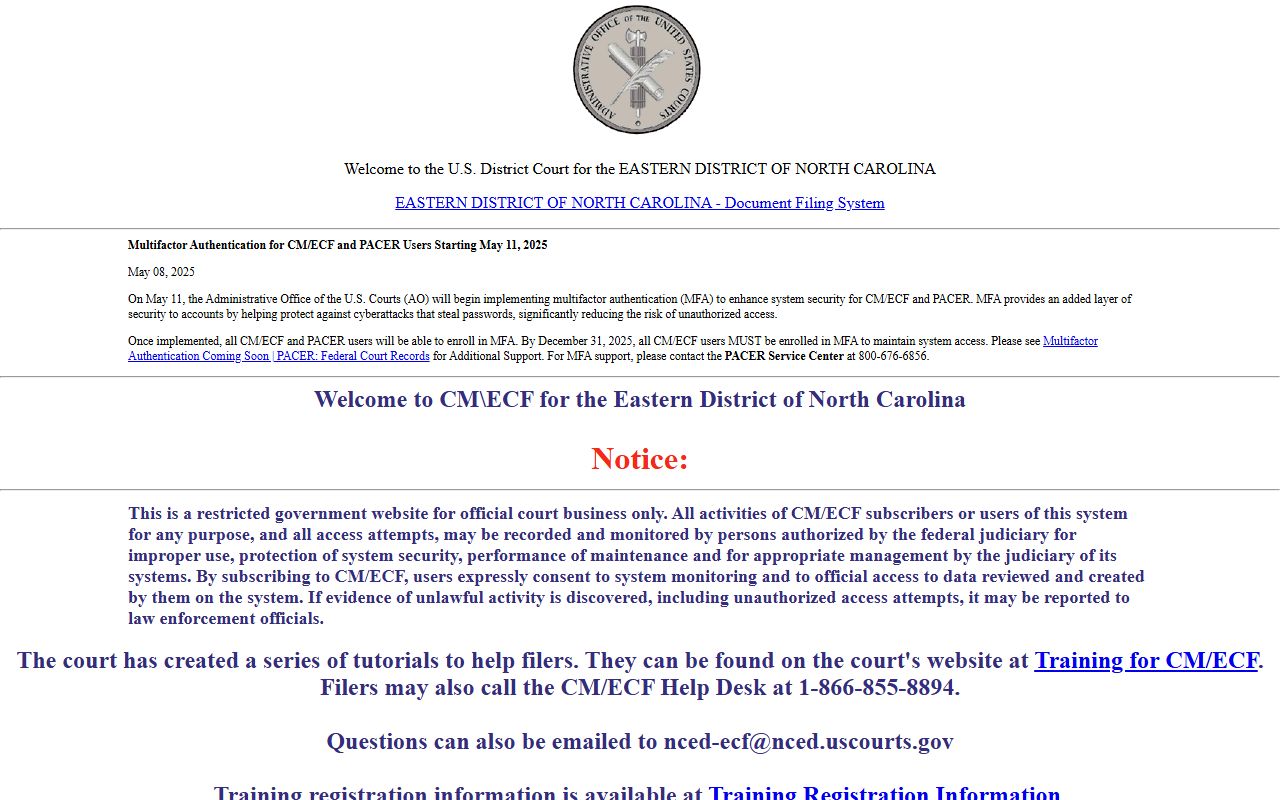
Federal electronic filing access is account-based and separate from Wake County state court hearing search.
Docket vs Full Case File
A Wake County docket is a map of case events. The full case file is the record behind those events. For example, a docket may show that a motion was filed, that a hearing was continued, or that judgment was entered. The full file may hold the motion text, attached exhibits, order, signed judgment, notice, and certificate of service. Certified copies come from the clerk, not from a copied docket screen.
| Feature | Docket | Full Case File |
|---|---|---|
| Format | Chronological entries and hearing data. | Documents, pleadings, orders, notices, and file materials. |
| Best use | Track case progress and court dates. | Review legal content or obtain official copies. |
| Access route | Portal Search Hearings, Smart Search, calendars, terminals. | Clerk office in the county where the case is located. |
| Limit | May omit restricted details or document text. | May include restricted documents that are not public. |
The next image is from the PACER court lookup for the Eastern District of North Carolina.
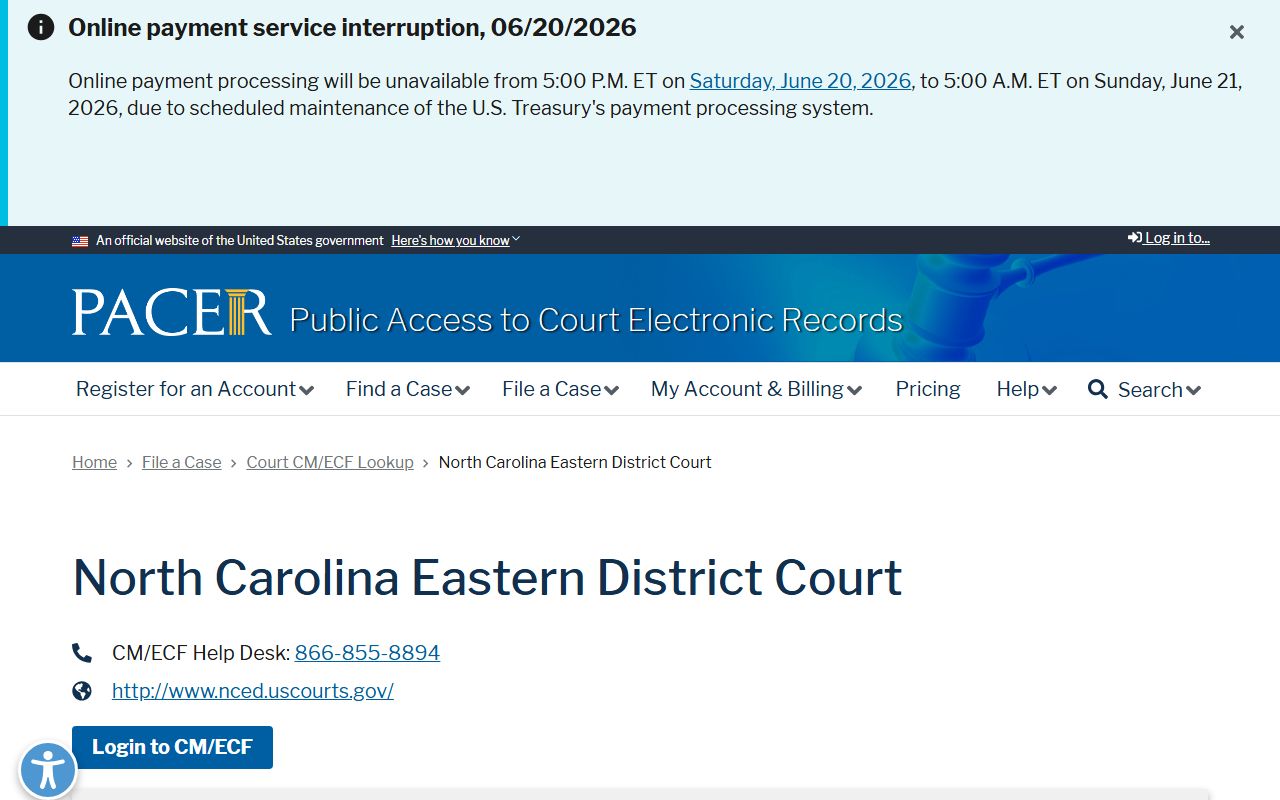
PACER applies to federal records, while Wake County Superior Court and District Court dockets use state court access channels.
Missing Wake County Hearing
If a Wake County hearing is missing from Portal, check the search value first. Name spellings, case-number punctuation, business names, and county filters can change results. Search Hearings and Smart Search do different work, so run both when a hearing date and case summary do not line up.
Then use the fallback chain. Call the direct case-type contact in the Wake County court contact directory, visit a public terminal, or ask the Clerk of Superior Court about the file. Traffic and misdemeanors use 919-792-4300. Felonies use 919-792-4300. Record checks, expungements, driver's licenses, and disposed cases use 919-792-4325. The full case file for Wake County court docket questions remains with the clerk in the county where the case is located.
The image below comes from the U.S. Bankruptcy Court for the Eastern District of North Carolina.
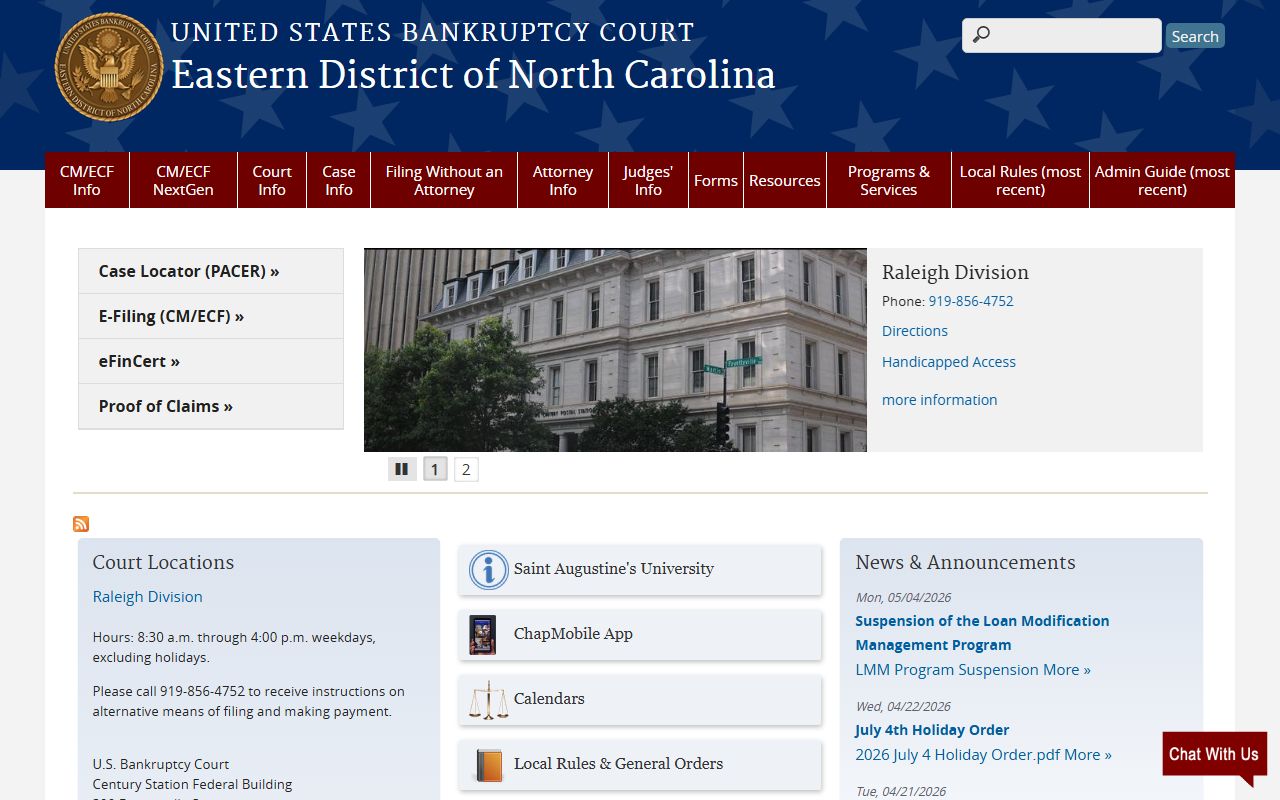
Bankruptcy court records are another separate federal docket source and should not be searched as Wake County state court cases.
The final docket image is from the Raleigh bankruptcy court location page.
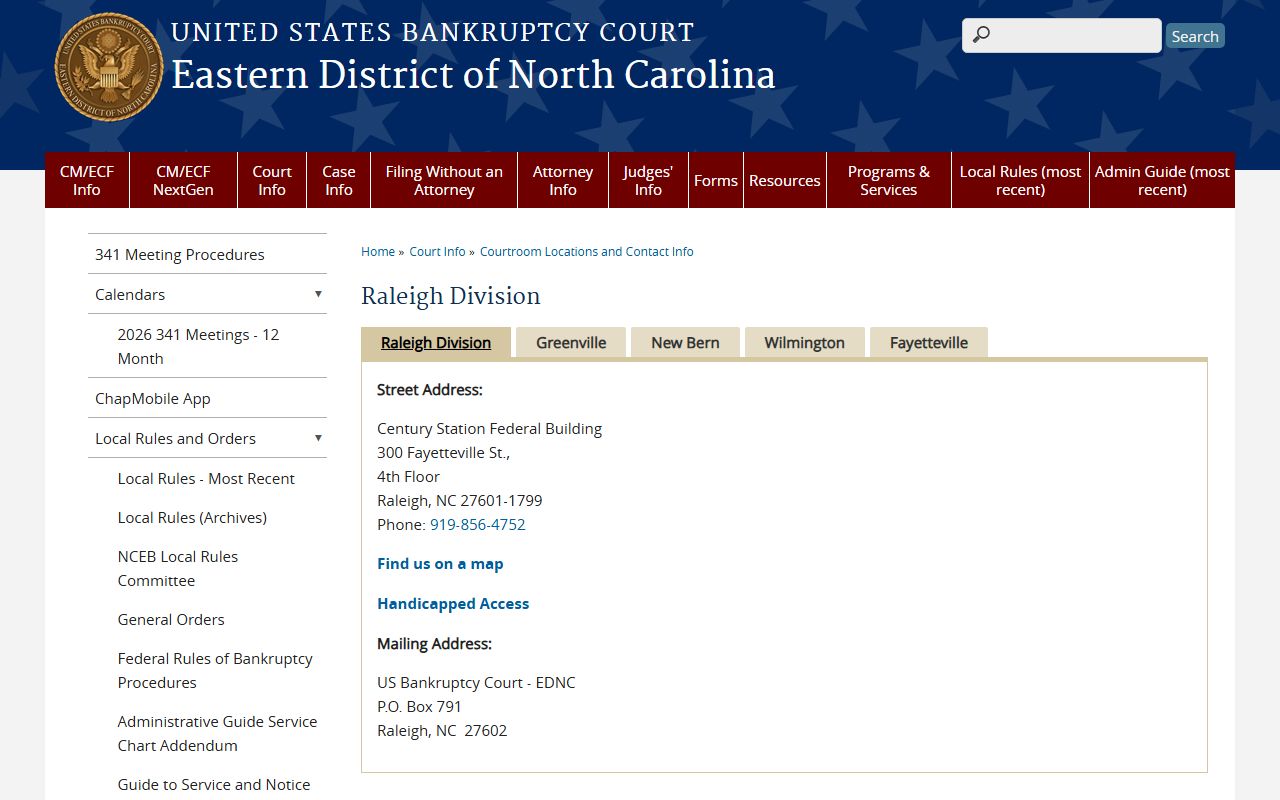
Raleigh has county, state, federal district, and bankruptcy court offices, so docket source matters before any search begins.