
How To Search Wake County Court Records
Wake County court records are searched through statewide N.C. eCourts tools, clerk public terminals, and in-person file review. The main online route is the N.C. eCourts Portal, which supports case information, hearing dates, judgment search, and payments when available. Portal access is useful, but it is not the only channel. A certified copy, older paper file, restricted file question, or complete case packet still points to the Wake County Clerk of Superior Court.
The official Portal training page names Smart Search, Search Hearings, NC Judgment Search, wildcard tips, result fields, and payment tools. Search by exact case number when possible. Party names, business names, attorney names, attorney bar numbers, courtroom, judicial officer, citation number, case type, status, location, and judgment date filters may also help depending on the Portal module.
- Start with the Wake County Judicial Branch page or go directly to the N.C. eCourts Portal.
- Use Smart Search for case information by name, case number, attorney, citation, or another visible search value.
- Use Search Hearings when the goal is a hearing date, courtroom, judicial officer, or calendar entry.
- Use NC Judgment Search for judgment index information by party name or case number.
- Contact the Clerk of Superior Court when a certified copy, paper file, or restricted-record answer is needed.
| Search field | Use | Wake County note |
|---|---|---|
| Case number | Best direct match for a known file | Wildcard case-number searches need at least four characters followed by an asterisk. |
| Party name | Search by person or business | Name wildcard searches use at least three last-name characters and one first-name character followed by an asterisk. |
| Attorney or bar number | Hearing search and case filtering | Useful for civil superior and criminal calendar checks. |
| Judgment date and status | NC Judgment Search filtering | Results may show disposition status, parties, index time, and comments. |
| Citation number | Traffic case and payment lookup | Use Wake County when a statewide location filter is shown. |
The Wake County Judicial Branch landing page is the official county entry point for court services, calendars, Portal links, and courthouse information.
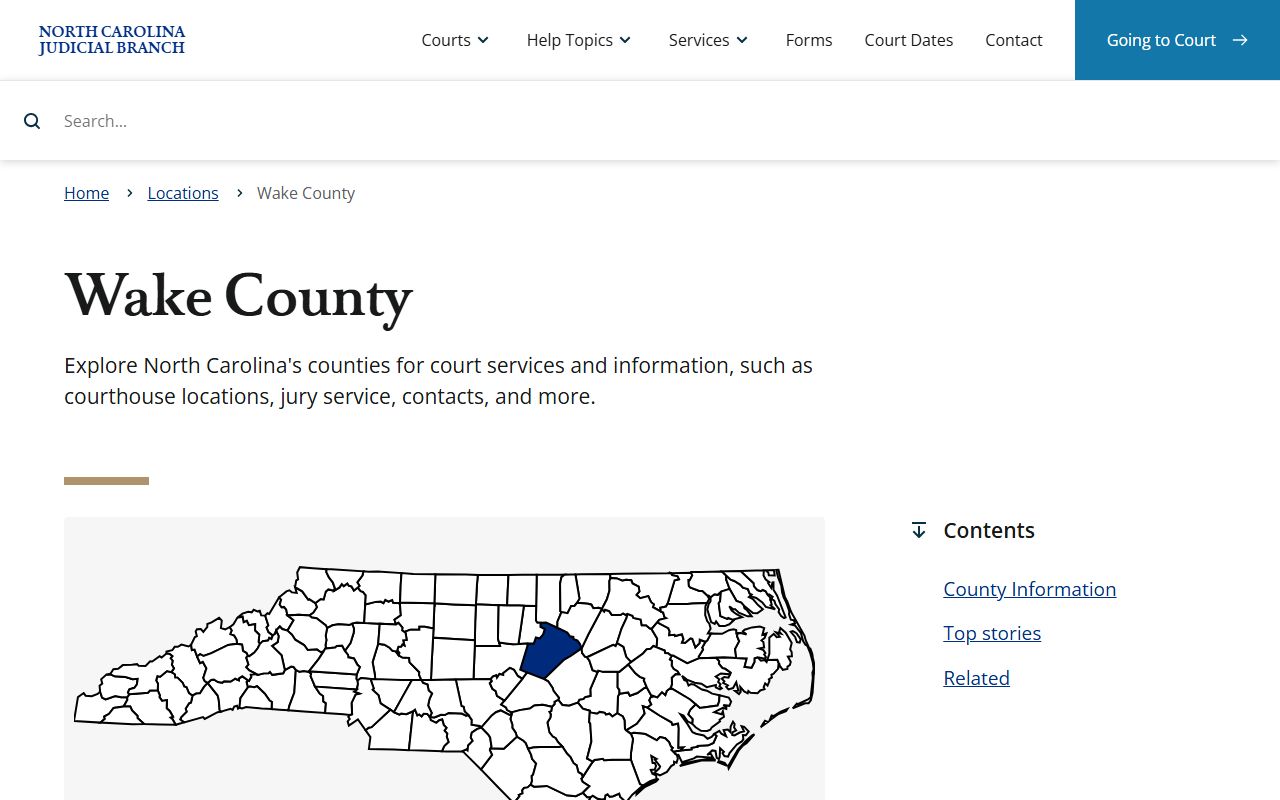
The county landing page helps connect Wake County Court users to the correct state court service before they request a clerk copy.
Wake County Court System
Wake County is part of North Carolina's unified General Court of Justice. The trial divisions are Superior Court and District Court. Superior Court is the general-jurisdiction trial division for felony criminal cases, civil cases over the state threshold, and appeals from District Court misdemeanors and infractions. District Court handles most misdemeanors, traffic infractions, family law, juvenile matters, small claims-related work, and lower-dollar civil cases. Magistrates work within the District Court system.
The N.C. Judicial Branch identifies Wake County as Prosecutorial District 10, Superior Court District 10, and District Court District 10. The Clerk of Superior Court is the record custodian for both trial divisions and also serves as judge of probate. Appeals from Wake County trial courts go to the North Carolina appellate system, usually the North Carolina Court of Appeals first.
| Court or office | Role in Wake County | Record access point |
|---|---|---|
| Superior Court | Felonies, civil cases over $25,000, District Court appeals | Clerk of Superior Court, Portal, and clerk terminals |
| District Court | Misdemeanors, infractions, traffic, family, juvenile, and lower civil cases | Clerk of Superior Court and Portal |
| Magistrates | Initial appearances, warrants, small claims duties, marriages | Court records after filing or return |
| Clerk of Superior Court | Records, filings, certified copies, estates, judgments, special proceedings | Main courthouse and case-type counters |
| District Attorney | Prosecutes state criminal cases in District and Superior Courts | Not the records custodian |
The N.C. eCourts Portal is the main online route for Wake County court records, hearing dates, judgments, and payments.
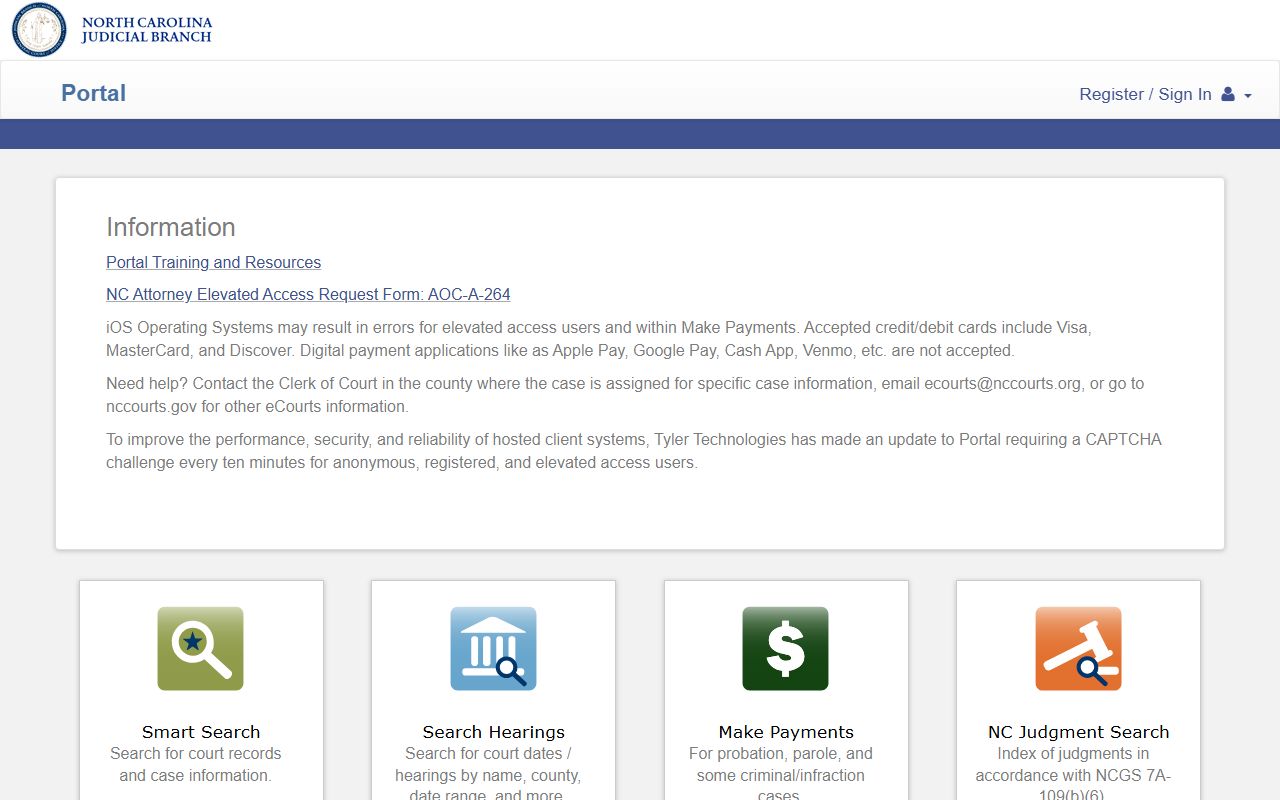
Portal is a starting point for case lookup, while clerk terminals and paper files remain important for full records and certified copies.
Wake County Court Buildings
Wake County court operations are split between two downtown Raleigh buildings. The Wake County Courthouse is the primary civil courthouse. The Judicial Branch states that all civil matters, except marriages, are conducted there. The Wake County Justice Center is the criminal-court and marriage venue. Traffic tickets, misdemeanors, felonies, criminal courtrooms, marriage functions, and several related public offices point to the Justice Center.
This split affects payment counters and record access. Traffic and criminal payments are handled at the Justice Center. Civil, family, special proceeding, and estate payments are handled at the Courthouse. A person searching Wake County Court records should confirm the case type before arriving because the buildings are close to each other but not the same.
Wake County Courthouse
316 Fayetteville St. Mall
Raleigh, NC 27601
Mailing: PO Box 351, Raleigh, NC 27602
919-792-4000
Register of Deeds
300 S. Salisbury St., Suite 1700
Raleigh, NC 27601
919-856-5460
The Wake County Courthouse page identifies the civil court building used for many Wake County Court records and estate matters.
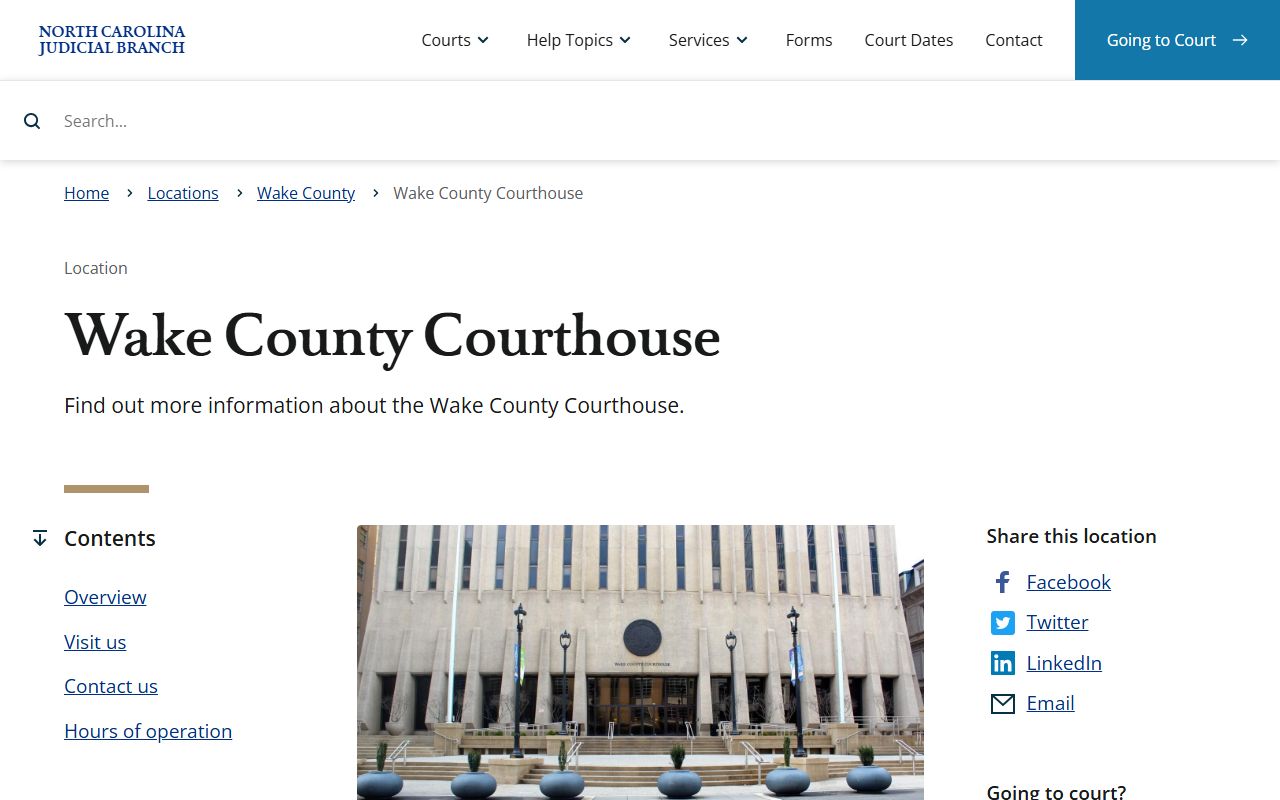
The civil courthouse is the key in-person location for civil files, estates, special proceedings, judgments, and related clerk work.
Wake County Court Record Types
Wake County Court records include civil, criminal, family, probate, traffic, juvenile, domestic violence, judgment, lien, and execution records. Criminal matters are conducted at the Justice Center. Civil matters, except marriages, are conducted at the Courthouse. Estate files and probate records are handled through the Clerk of Superior Court, Estates Division. Marriage licenses and marriage certificates are Register of Deeds records, not clerk court files.
A court record is not always the same thing as the related agency record. A court traffic record is different from an NCDMV driver record. A sheriff incident report is different from a criminal case file. A marriage certificate is different from a divorce judgment. Wake County search work is more accurate when those boundaries are kept clear.
- Civil records can include complaints, answers, motions, orders, judgments, liens, executions, foreclosures, and small claims appeals.
- Criminal records can include charges, warrants after return, indictments, pleas, bonds, dispositions, sentences, costs, and appeals.
- Family and divorce records are District Court records, with divorce judgments requested from the Clerk of Superior Court.
- Estate records are handled by the Clerk of Superior Court, Estates Division, not a separate probate court.
- Traffic records cover citations, waivers, dispositions, fines, costs, and DMV reporting where applicable.
The Wake County Justice Center page identifies the criminal court and marriage venue for Wake County Court users.
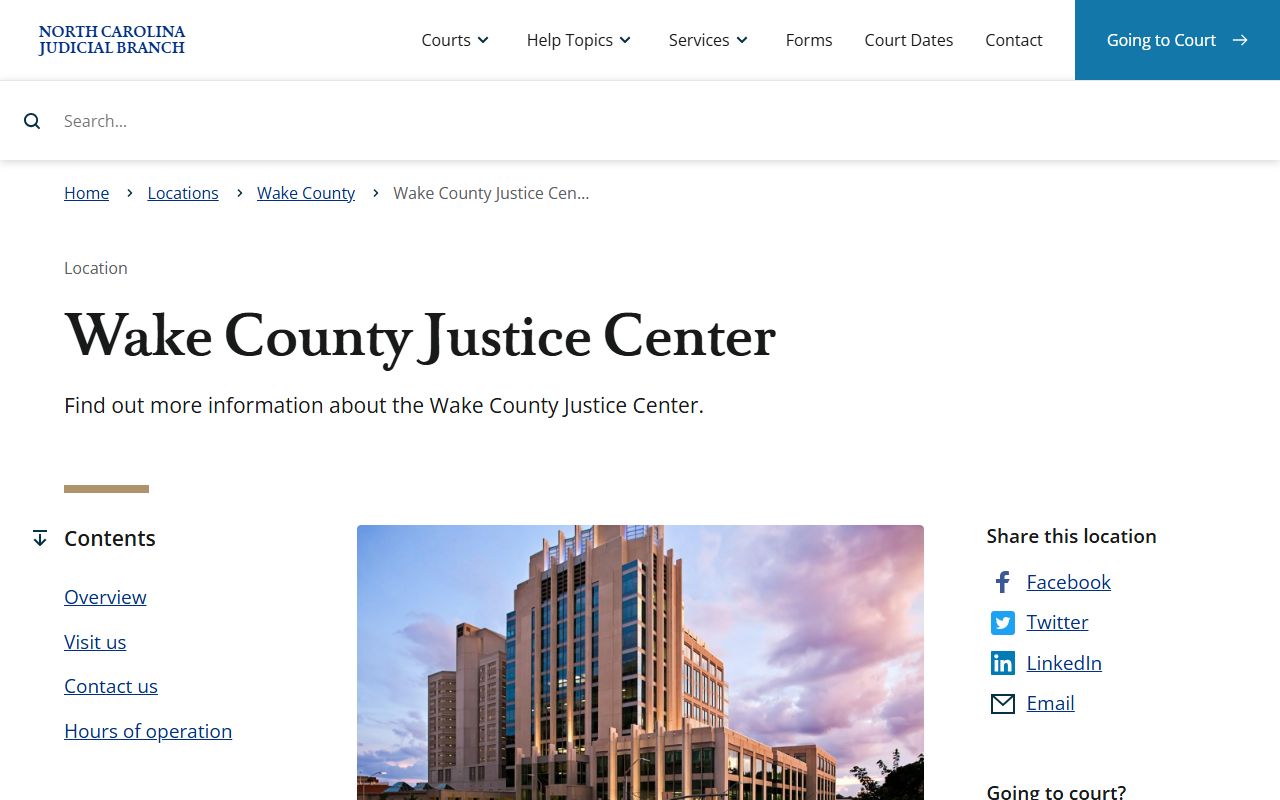
The Justice Center is central for criminal matters, traffic, misdemeanors, felonies, and marriage-related court appearances.
What Wake County Court Records Show
Wake County court records may show different fields depending on the case type and the search channel. A Portal case summary is not the full paper file. Common fields include case number, court location, case type, status, filing date, index date, parties, attorneys, hearing date, courtroom, docket events, judgments, financial balances, and disposition. Criminal and traffic records may add defendant name, citation number, charge description, statute, bond, plea, sentence, fines, costs, restitution, probation fees, and appeal entries.
| Field | What it shows |
|---|---|
| Case number | The official court file identifier, often with North Carolina division or case-type coding. |
| Parties | Defendant, plaintiff, petitioner, respondent, judgment debtor, or other party roles. |
| Docket events | Chronological filings, hearings, motions, orders, continuances, and dispositions. |
| Charges or claims | Criminal charge descriptions, civil causes, traffic offenses, or estate petition types. |
| Disposition or judgment | The outcome of a charge, claim, motion, or case. |
| Financial entries | Court costs, fines, restitution, fees, judgment amounts, or payment status where visible. |
Wake County Court Public Access
North Carolina public access starts with the office that keeps the record. Court files, criminal dispositions, civil judgments, estates, divorce judgments, and traffic court records route through the Clerk of Superior Court. Marriage licenses and marriage certificates route through the Register of Deeds. Jail booking and incident records route through the Sheriff's Office or the investigating law-enforcement agency.
Key North Carolina access laws:
G.S. 132-1 defines public records broadly unless a specific law restricts access.
G.S. 132-6 gives inspection and copying rights at reasonable times under reasonable supervision.
G.S. 132-6.2 limits many uncertified copy charges to actual cost unless another law applies.
G.S. 7A-109 governs clerk record-keeping and electronic court records.
Criminal investigative records, sealed files, expunged records, juvenile files, adoption records, mental-health records, and protected personal identifiers may be withheld or redacted. Returned warrants are public unless sealed by court order, but active investigative material is generally not public in the same way.
The Portal training page explains Smart Search, hearing search, NC Judgment Search, and Wake County court records lookup fields.
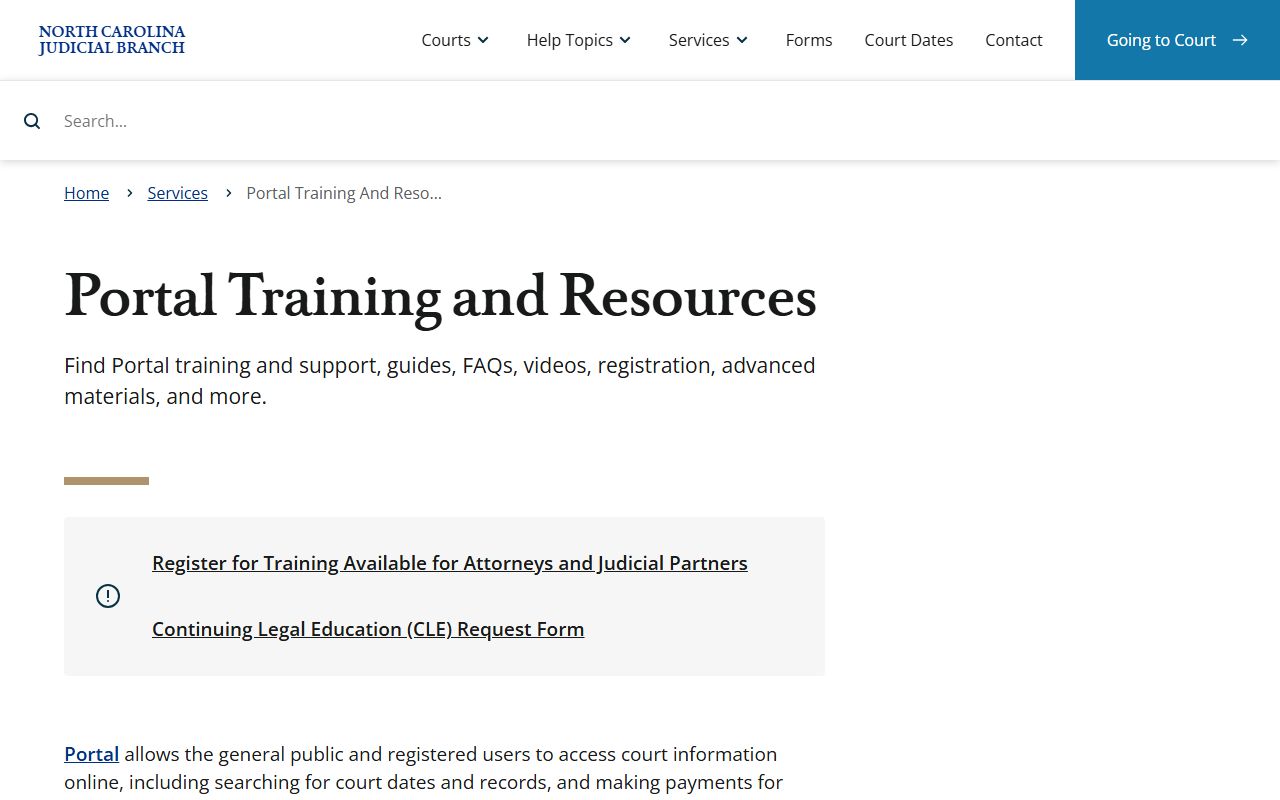
Those training details make Wake County searches more precise than a broad name search alone.
Restricted Wake County Court Records
Juvenile records are a clear restricted category. North Carolina law protects juvenile delinquency, abuse, neglect, dependency, and related records from ordinary public inspection. Sealed and expunged criminal records are also restricted. An expunction clears qualifying public records so the entry does not appear in ordinary public checks. Wake County's contact directory lists a direct number for record checks, expungements, driver's licenses, and disposed cases: 919-792-4325.
Adoption records, mental-health proceedings, and records with personal identifying information may also be restricted or redacted. Public search tools should not be treated as a complete background-check source. The Judicial Branch warns that people performing background checks should use county clerk offices rather than relying only on Portal.
Wake County Sheriff And Jail
The Wake County Sheriff's Office is led by Sheriff Willie Rowe. Sheriff's records, jail custody, incident reports, inmate inquiry, recent arrests, wanted persons, and detention information are separate from Clerk of Superior Court case files. The Sheriff's Office Police-to-Citizen portal provides public safety tools, and the Wake County Detention Division operates adult detention facilities with an official capacity listed as 1,574.
The Sheriff's Records Division accepts incident report requests by email, mail, or fax. Mailed incident report copies have a $2 fee by money order or check. Criminal history reports are routed to CCBI. For jail custody, use the Wake P2C inmate route or the detention contacts. A jail booking record may show custody status, charges, bond, and court date, but the full criminal court file and final disposition are court records.
| Sheriff record | Wake County channel | Important distinction |
|---|---|---|
| Incident report | Sheriff's Records Division | Law-enforcement record, not the court case file. |
| Inmate custody | Wake P2C Inmate Inquiry | Shows jail status, not a final conviction. |
| Wanted persons | Wake P2C wanted and most-wanted routes | Status can change quickly and should be confirmed officially. |
| Criminal case | Clerk of Superior Court and Portal | Shows court filings, pleas, orders, and disposition. |
The Wake County Sheriff's Office page identifies Sheriff Willie Rowe and links to public safety and records resources.
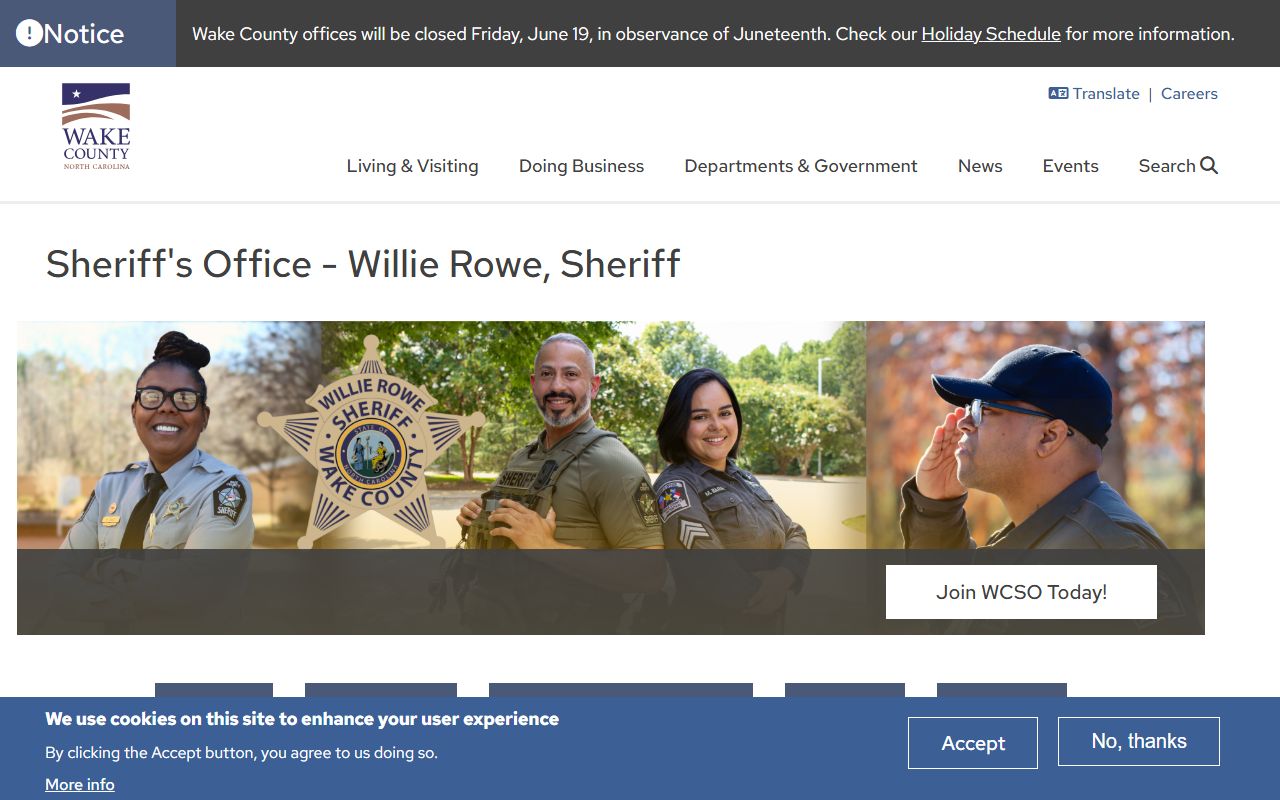
Sheriff records are important for arrests and jail status, but final court outcomes still belong with the court record.
Wake County Marriage Divorce Probate
Marriage records, divorce records, and probate records split across different offices. Wake Register of Deeds issues marriage licenses and certified marriage certificates. Divorce judgments and divorce case files are court records from the Clerk of Superior Court. N.C. Vital Records has divorce certificates from 1958-present, but full case documentation and judgment copies come from the county clerk where the divorce was granted.
Wake County probate is not a separate probate court. Estate administration, probate of wills, guardianship, and many special proceedings route through the Clerk of Superior Court, Estates Division. The Wake Estates appointment scheduler is used for estate intake and encourages phone appointments because of high volume.
The Wake County Register of Deeds page identifies the office that handles marriage certificates and land records outside the court clerk system.
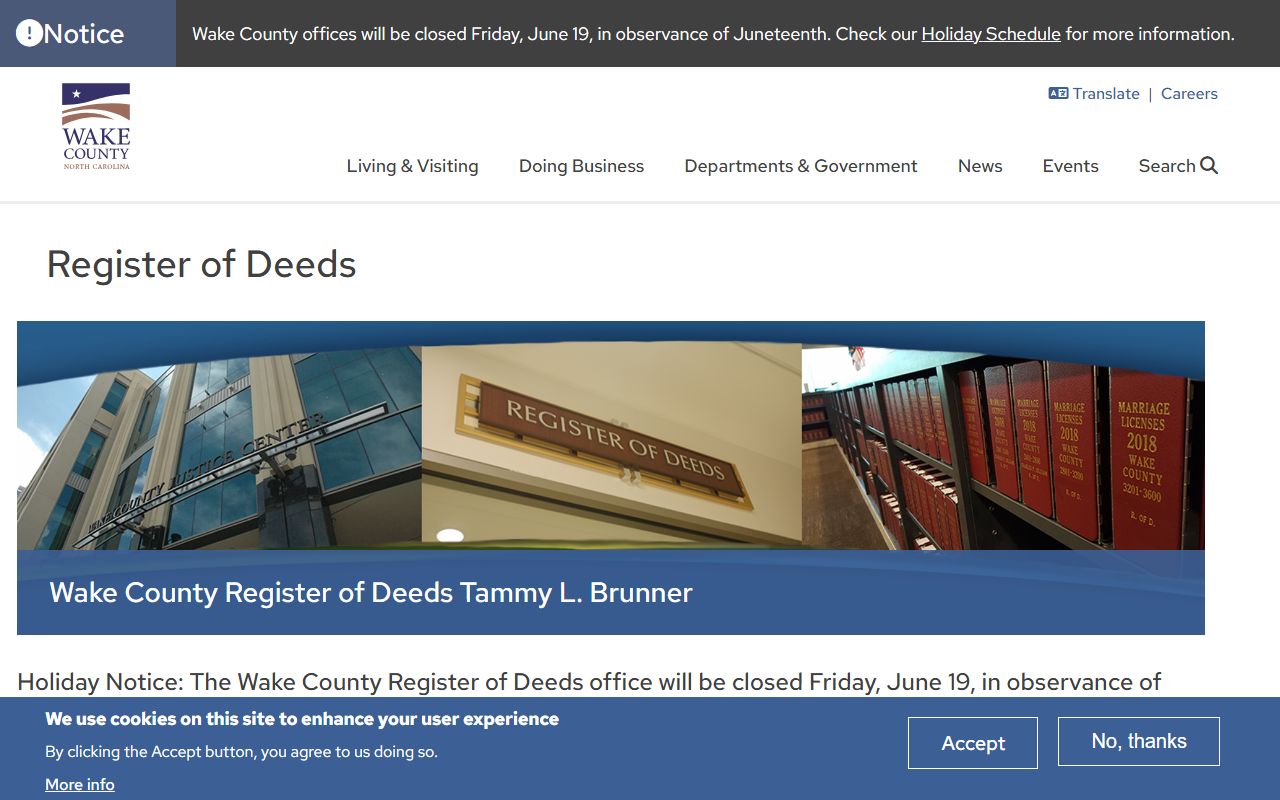
The Register of Deeds distinction prevents a marriage certificate request from being sent to the court clerk by mistake.
Wake County Court Records Fees
Wake County payment rules vary by case type. Traffic and criminal payments are handled at the Justice Center. Civil, family, special proceeding, and estate payments are handled at the Courthouse. Mail payments for traffic and criminal cases use money order or certified check payable to Wake County Clerk of Superior Court. Cash and personal checks should not be mailed.
| Item or channel | Amount or rule | Record use |
|---|---|---|
| Traffic/criminal mail payment | Money order or certified check only | Fines, costs, and eligible waivers. |
| In-person court payments | Cash, card with processing fees, money order, certified check | Accepted at the proper Wake County counter. |
| Estate opening filing fee | $120 | Formal estate administration through the clerk. |
| ROD certified birth, death, or marriage copy | $10 | Register of Deeds vital certificate copy, not court copy. |
| Marriage license | $60 | Issued by Wake Register of Deeds. |
The Wake Register of Deeds self-service search is a separate public records portal for ROD records, not Wake County Court case files.
ROD search access is useful for land and marriage-related records, while court cases stay with eCourts and the clerk.
Interpret Wake County Court Records
Wake County court records use terms that can affect how a result should be read. A charge is not the same as a conviction. A disposition is the outcome of a charge, claim, or case event. A docket is the chronological list of filings, hearings, and court actions. A calendar is the schedule of hearings or trials. An order is a judge's written directive, while a judgment is the final or enforceable decision on a claim or obligation.
- Disposition
- The outcome of a charge, claim, motion, or case event.
- Expunction
- A court process that clears qualifying public records of a charge or conviction.
- Indictment
- A formal felony charging document returned by a grand jury.
- Bond
- Security or conditions set for release before case resolution.
- Judgment
- The court's final or enforceable decision on a claim or obligation.
Wake County Court History
Wake County's public court footprint reflects several eras of North Carolina court administration. Raleigh is the county seat and the state capital, so state courts, county courts, public records, the District Attorney, Public Defender, Register of Deeds, federal district court, bankruptcy court, and U.S. Marshals are all in or near downtown Raleigh. The modern Justice Center concentrates criminal court, public records, and county government functions, while the courthouse remains the civil hub.
North Carolina Superior Court is the state's oldest trial court, established in 1777. District Court was created later as part of the modern unified court structure. Wake County also became an early eCourts county in February 2023, when File & Serve, Guide & File, Portal, and Enterprise Justice case management went live in Wake, Harnett, Johnston, and Lee counties. Statewide eCourts reached all 100 counties on October 13, 2025.
The Wake County Detention Division page gives the official jail context connected to inmate, arrest, and court-date records.
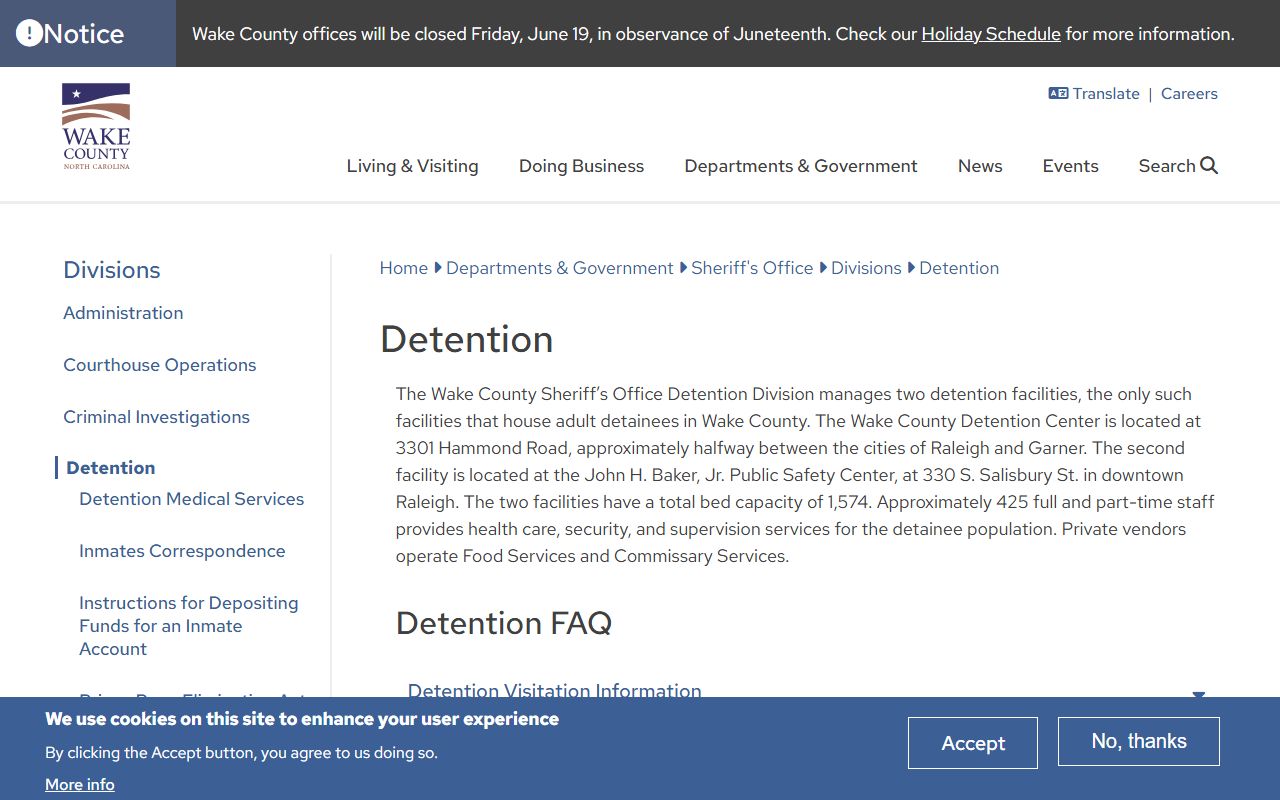
Detention records add custody context, but court records are still needed to confirm charges, dispositions, and sentences.
Wake County Court Records FAQ
Where are Wake County Court records searched online?
Use the N.C. eCourts Portal for online case information, hearing dates, judgment search, and some payments. Public terminals and clerk paper files remain official access channels when Portal does not provide enough detail.
Who keeps Wake County criminal and civil court records?
The Wake County Clerk of Superior Court keeps records for both Superior Court and District Court. Criminal and traffic work is centered at the Justice Center, while many civil, estate, and special proceeding files point to the Courthouse.
Are Wake County probate records in a separate probate court?
No. Probate and estate administration are handled by the Clerk of Superior Court, Estates Division. The clerk serves as judge of probate under the North Carolina court structure.
Are marriage records court records?
Marriage licenses and marriage certificates are Wake Register of Deeds records. Divorce judgments are court records requested from the Clerk of Superior Court.
Can Portal replace a certified copy?
No. Portal is a search and access tool. A certified copy must come from the Clerk of Superior Court or the proper records custodian.
Where are Wake County inmate records searched?
Use Wake County Sheriff's Office P2C inmate tools for jail custody information. Use court records for case filings, hearings, pleas, dispositions, and sentences.