
Wake County Superior Court Overview
North Carolina's court system is the General Court of Justice. The trial divisions are Superior Court and District Court, with magistrates working within the District Court system. Wake County is identified by the N.C. Judicial Branch as Prosecutorial District 10, Superior Court District 10, and District Court District 10. The official statewide overview at N.C. Judicial Branch Learn explains the unified structure and the roles of the courts.
Superior Court is the general-jurisdiction trial division. The N.C. Superior Court page states that Superior Court hears civil cases involving more than $25,000, all felony criminal cases, and misdemeanor and infraction appeals from District Court. District Court handles many high-volume matters first, including misdemeanors, infractions, family law, juvenile cases, small claims-related work, and lower-dollar civil cases.
The Clerk of Superior Court keeps records for both trial divisions in Wake County. Superior Court is the main trial division for higher civil cases, felony cases, and District Court appeals, while District Court remains a major part of the local system for misdemeanors, infractions, family cases, juvenile matters, and lower civil work. Magistrates fit within that District Court structure rather than a separate local court.
The N.C. Judicial Branch Learn page shows the statewide court structure that Wake County Superior Court follows.
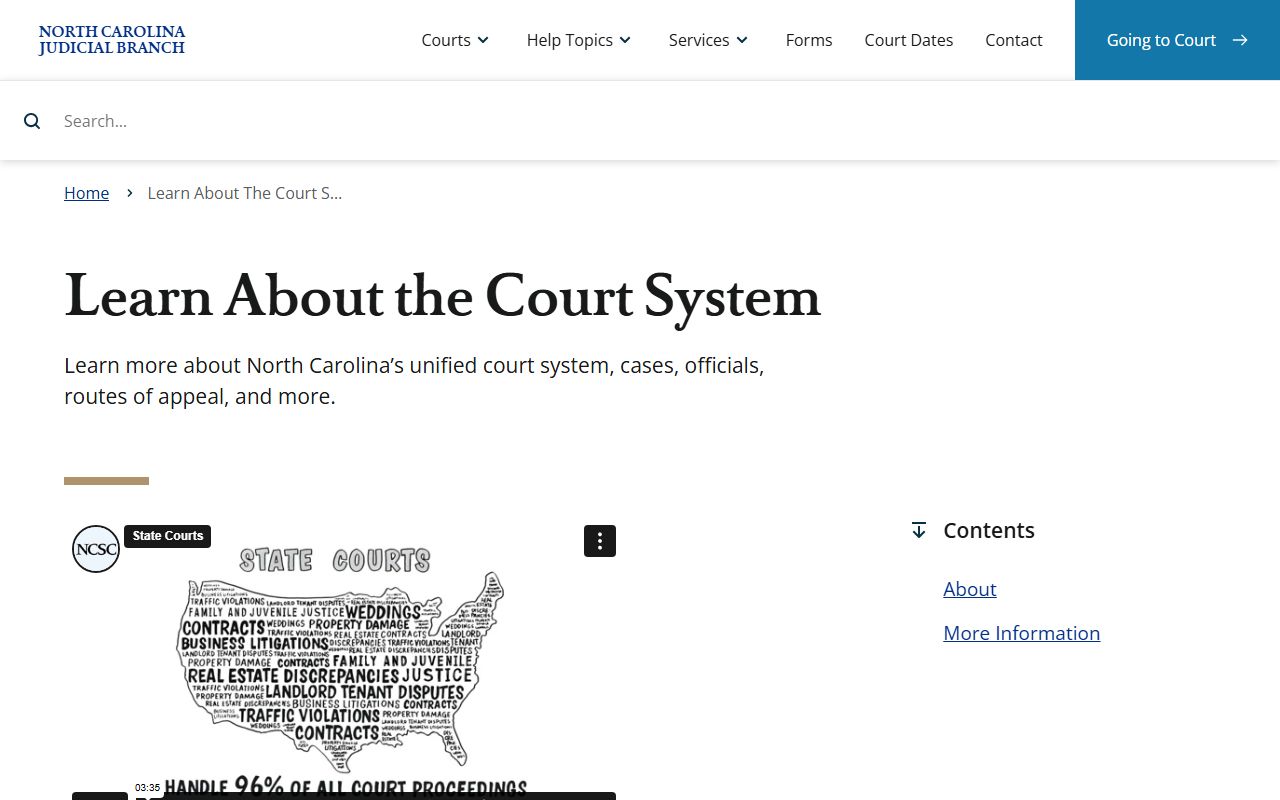
That statewide framework is why Wake County does not use separate justice courts, JP courts, or a stand-alone county probate court.
Wake County Court Hierarchy
Wake County's court hierarchy begins with local trial work and moves up to the North Carolina appellate courts. Superior Court and District Court are both trial divisions. Magistrates are judicial officers in the District Court system, not a separate elected lower court. Appeals from Wake County trial courts go into the North Carolina appellate system, principally the North Carolina Court of Appeals, with Supreme Court of North Carolina review depending on case type and law.
| Court or office | Wake County role | Address or phone |
|---|---|---|
| Supreme Court of North Carolina | State high court for final state appellate review in appropriate matters | State appellate court based in Raleigh |
| North Carolina Court of Appeals | Intermediate appellate court for most appeals from trial courts | State appellate court based in Raleigh |
| Superior Court District 10 | Felonies, civil cases over $25,000, and District Court misdemeanor or infraction appeals | Superior Court Judges: 919-792-4950; felonies: 919-792-4300 |
| District Court District 10 | Misdemeanors, infractions, traffic, family law, juvenile, small claims, and lower-dollar civil matters | District Court Judges: 919-792-4800; traffic/misdemeanors: 919-792-4300 |
| Magistrates | Initial criminal processes, warrants, small claims, marriages, and statutory duties | 919-792-4900 |
| Clerk of Superior Court | Records, filings, certified copies, estates, judgments, finance, and special proceedings | Main: 919-792-4000; estates: 919-792-4450 |
The N.C. Superior Court page defines the jurisdiction used by Wake County Superior Court.
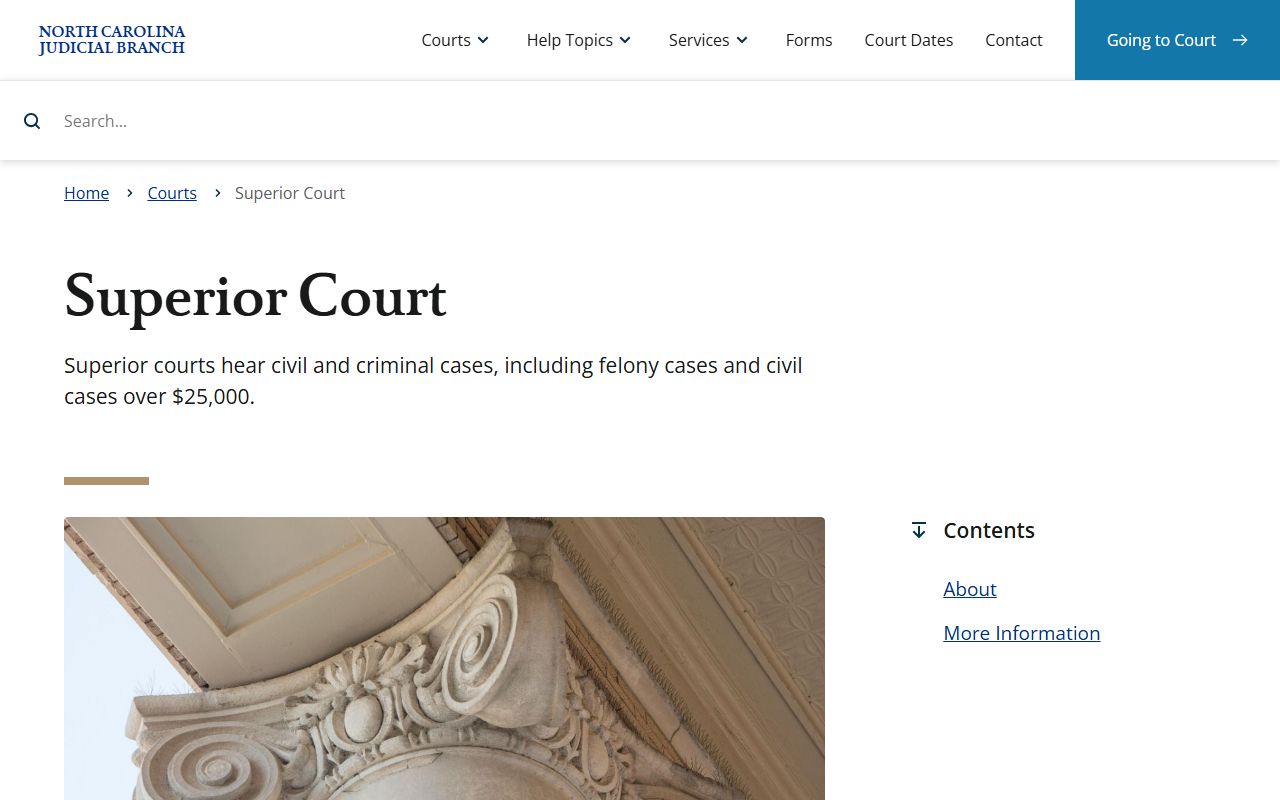
The jurisdiction split explains why felony cases and large civil cases move differently from traffic or misdemeanor matters.
Wake County Superior Court Locations
Wake County court operations are split between two downtown Raleigh buildings. Civil matters, except marriages, are conducted in the Wake County Courthouse. Criminal matters and marriages are conducted at the Wake County Justice Center. Superior Court work therefore depends on case type: civil superior matters point to the courthouse, while felony criminal matters point to the Justice Center.
| Court or division | Type | Address | Phone |
|---|---|---|---|
| Superior Court District 10 | Felony criminal and higher civil trial division | Criminal: Wake County Justice Center, 300 S. Salisbury St., Raleigh, NC 27601; Civil: Wake County Courthouse, 316 Fayetteville St. Mall, Raleigh, NC 27601 | Superior Court Judges 919-792-4950; felonies 919-792-4300 |
| District Court District 10 | Misdemeanor, traffic, family, juvenile, lower civil, and small-claims-related division | Traffic and misdemeanors: Wake County Justice Center; civil and family files may use the Courthouse | District Court Judges 919-792-4800; traffic/misdemeanors 919-792-4300 |
| Administrative Traffic Court | District Court traffic disposition setting | Wake County Justice Center, Courtroom 101, 300 S. Salisbury St., Raleigh, NC 27601 | 919-792-4300 |
| Magistrates | Initial appearances, warrants, small claims, marriages, and other statutory duties | Wake County Justice Center and related magistrate locations as assigned | 919-792-4900 |
Wake County Courthouse
316 Fayetteville St. Mall
Raleigh, NC 27601
919-792-4000
Civil matters except marriages
Wake County Justice Center
300 S. Salisbury St.
Raleigh, NC 27601
919-792-4000
Criminal matters and marriages
Superior Court Vs District Court
Superior Court and District Court are both state trial courts, but they are not interchangeable. Superior Court handles felony cases and higher civil cases. District Court handles most day-to-day lower-level work first. Magistrates support the District Court system by handling early criminal processes, warrants, small claims duties, and marriage ceremonies. Wake County users should match the case type to the division before searching, appearing, or requesting a record.
| Feature | Superior Court | District Court | Magistrates |
|---|---|---|---|
| Civil cases | Generally civil cases over $25,000 | Lower-dollar civil matters and small claims appeals | Small claims functions under statutory authority |
| Criminal cases | Felonies and appeals from District Court misdemeanors or infractions | Misdemeanors, infractions, traffic, and preliminary felony stages | Initial appearances, warrants, and release conditions |
| Family and juvenile | Not the main division for ordinary family filings | Family law and juvenile matters | Limited statutory duties, not full family case trials |
| Records custodian | Clerk of Superior Court | Clerk of Superior Court | Clerk/court system records after filing or return |
| Wake County building | Justice Center for felony criminal; Courthouse for civil | Justice Center for traffic and misdemeanors; Courthouse for many civil files | Contact magistrates at 919-792-4900 for routing |
The North Carolina judicial overview summarizes Superior Court, District Court, magistrates, and the Clerk of Superior Court probate role.
The overview supports the Wake County distinction between trial divisions and the clerk office that keeps their records.
Wake County Case Movement
Criminal case movement depends on charge level. A misdemeanor or infraction usually begins in District Court. A felony may begin with arrest, magistrate review, bond conditions, and early District Court appearances before indictment or other movement to Superior Court. The District Attorney for Prosecutorial District 10 prosecutes state criminal cases in both District Court and Superior Court.
Felony criminal flow: Arrest or process › magistrate review › first appearance › probable cause or indictment path › Superior Court arraignment › pretrial motions › plea or trial › sentencing › appeal.
Civil superior flow: Complaint or petition filed › answer or response › motions and discovery › mediation or arbitration when required › trial or dispositive order › judgment › appeal.
District Court cases can move upward. Misdemeanor and infraction appeals from District Court go to Superior Court. Civil matters may also move by appeal or procedural route depending on case type. The Clerk of Superior Court maintains the file record as events, orders, and dispositions are entered.
Wake County DA And Defender
The District Attorney for Prosecutorial District 10 is Lorrin Freeman. The official District Attorney District 10 page lists Wake County, phone 919-792-5000, fax 919-792-5001, and mailing address PO Box 31, Raleigh, NC 27602. The DA prosecutes criminal cases and some juvenile matters, prepares criminal trial dockets, and advises law enforcement. The office cannot give legal advice to defendants about charges, insurance points, or license points.
Wake County Public Defender is in Defender District 10. North Carolina Indigent Defense Services lists Public Defender Deonte' Thomas and a public defender phone of 919-792-5400. The public defender is not a general records office. It is the appointed-counsel office for eligible defendants and should be used for client or appointed-counsel questions, not broad case lookup.
District Attorney, District 10
PO Box 31
Raleigh, NC 27602
919-792-5000
Fax: 919-792-5001
Wake County Public Defender
Defender District 10
Wake County, NC
919-792-5400
Appointed counsel office
Note: A May 2025 news item reported that District Attorney Freeman would not seek reelection in 2026, but her term runs through December 2026.
The Prosecutorial District 10 page identifies the Wake County District Attorney office connected to Superior Court criminal cases.
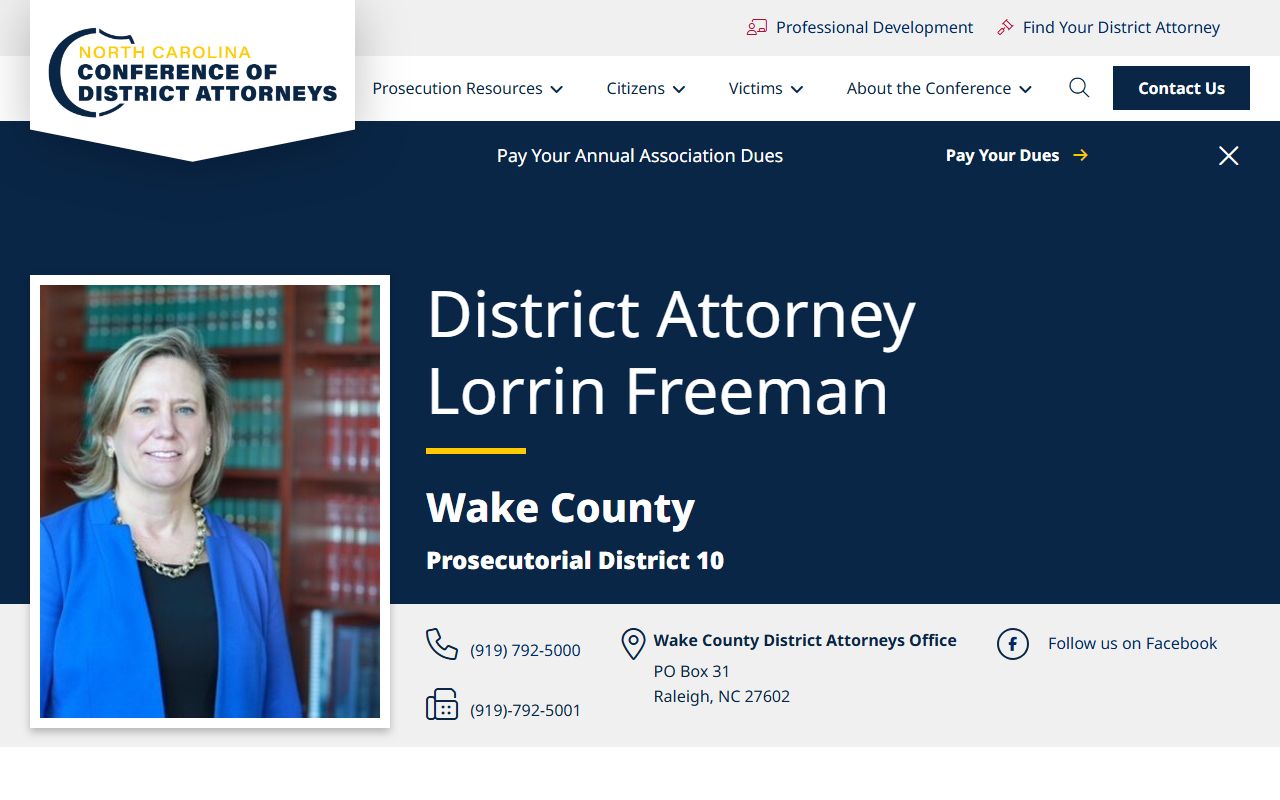
The DA office is part of case movement for criminal matters, but it is not the custodian for court records.
Search Wake County Court Records
Wake County Superior Court and District Court records are searched through statewide eCourts tools, clerk terminals, and clerk paper files. The N.C. eCourts Portal supports Smart Search, hearing search, NC Judgment Search, and payments where allowed. Public self-service terminals in clerk offices remain an official option for criminal, civil, special proceeding, and estate case information. Certified copies and full paper files require the Clerk of Superior Court.
Search by case number when possible. Portal training also supports name, business name, attorney name, attorney bar number, judicial officer, courtroom, citation, and judgment filters depending on the module. Civil superior remote hearing information may require checking the hearing tab for the Webex courtroom number, then using court administration instructions. For a fuller discussion of search fields and clerk copy channels, see Wake County court records.
| Search route | What it can show | When to use the clerk |
|---|---|---|
| Smart Search | Case information by name, case number, attorney, or citation where available | When a certified copy or complete file is needed. |
| Search Hearings | Court dates by case, party, attorney, judicial officer, or courtroom | When a hearing is missing or building/courtroom details need confirmation. |
| NC Judgment Search | Judgment index by party or case number with filters | When judgment documents, liens, or executions require certified copies. |
| Public terminal | Clerk-accessible court information | When paper file review in Wake County is required. |
The Wake County IDS page identifies the Defender District 10 office involved in appointed counsel matters.
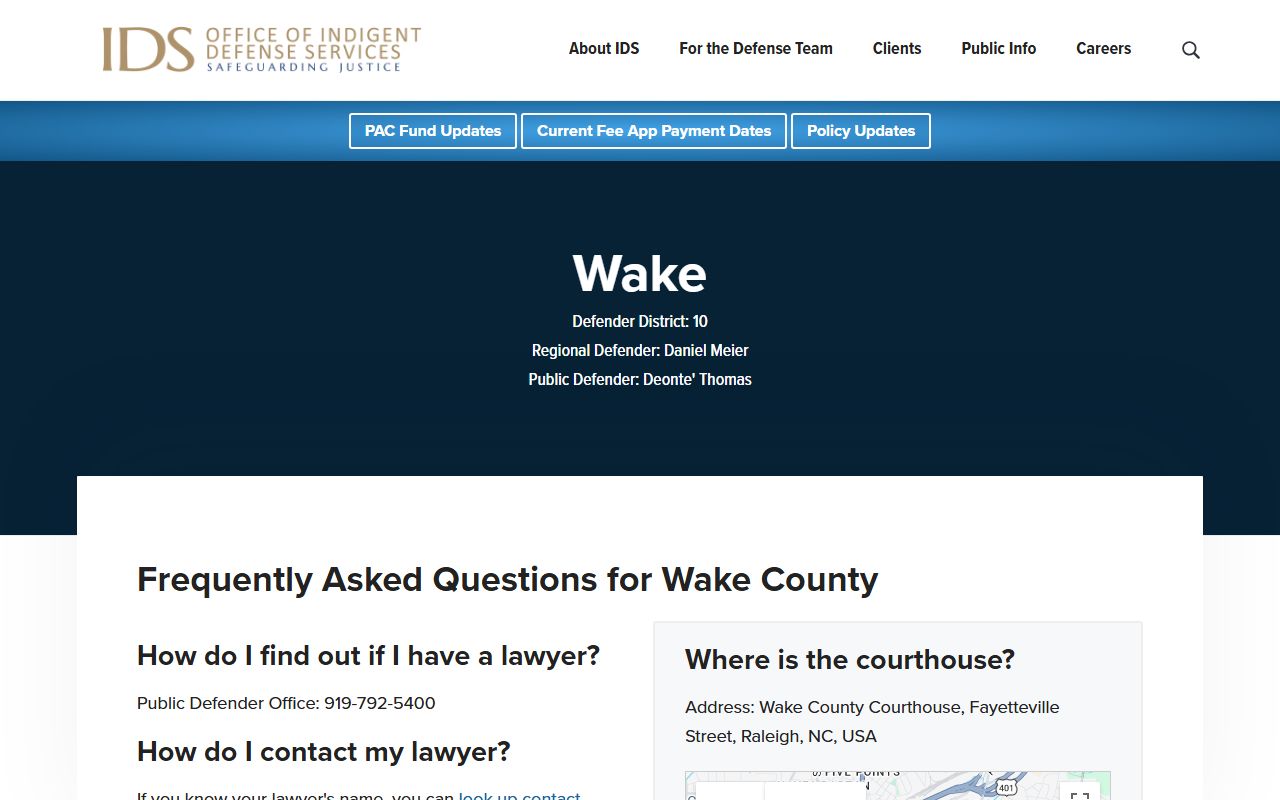
Public defender information helps place appointed counsel in the court system without treating that office as a records source.
Federal Court Near Wake County
Federal cases are separate from Wake County Superior Court and District Court records. Wake County is in the U.S. District Court for the Eastern District of North Carolina. The Raleigh federal courthouse is at 310 New Bern Avenue, Raleigh, NC 27601, with federal case access through PACER and CM/ECF rather than the N.C. eCourts Portal. Bankruptcy cases use the U.S. Bankruptcy Court for the Eastern District of North Carolina, also separate from state court records.
The Eastern District of North Carolina Raleigh courthouse page identifies the federal courthouse serving Raleigh and Wake County federal matters.
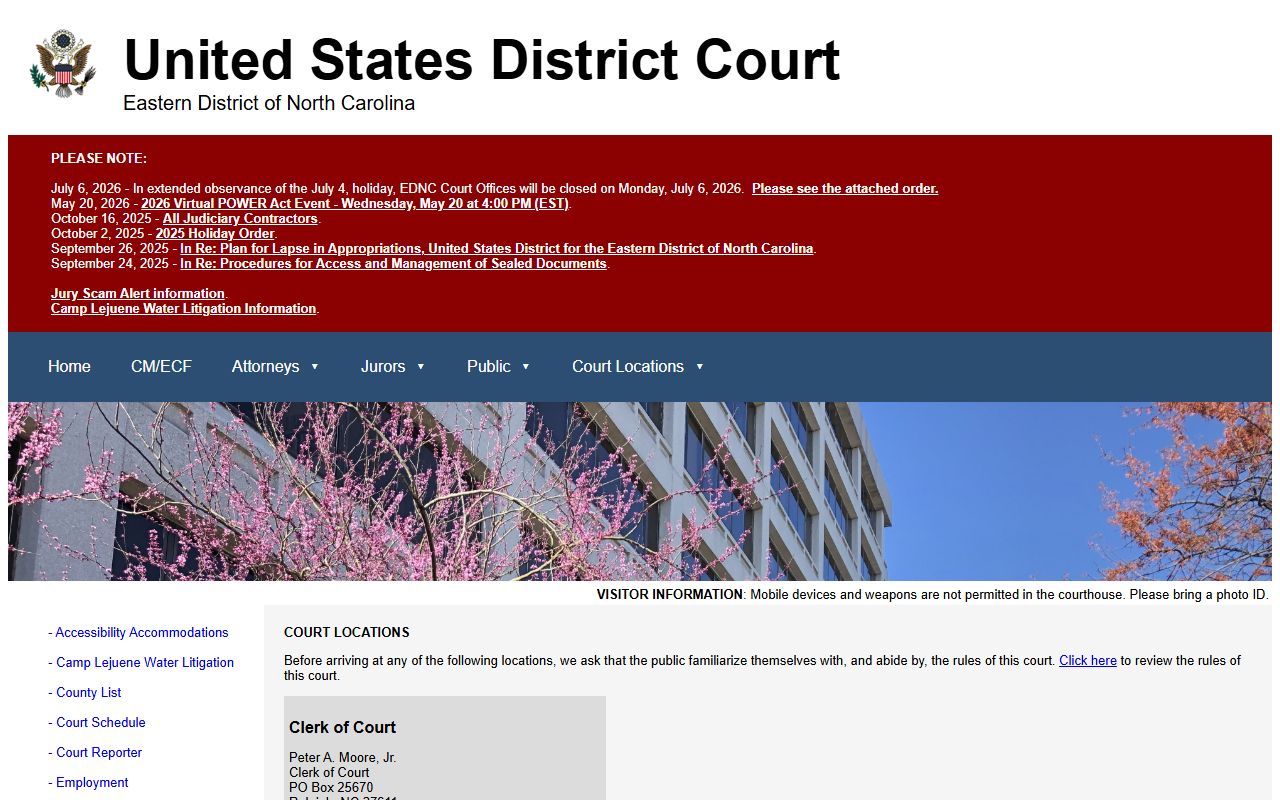
The federal courthouse image supports a practical boundary: federal records use federal systems, while Wake County trial court records use state court channels.