
Wake County Probate Records Office
Wake County estate administration is part of the North Carolina court system. The N.C. Judicial Branch wills and estates help topic explains the statewide probate framework, while Wake County routes local filings through the Clerk of Superior Court, Estates Division. The clerk serves as the ex officio judge of probate, so filings such as an application to probate a will, a request for letters testamentary, a small estate affidavit, or an estate administration file are court records kept by the clerk.
The estates counter is tied to the civil courthouse side of Wake court operations. Civil matters, estates, special proceedings, foreclosure, guardianship, name changes, judgments, liens, and many paper-file requests point to the Wake County Courthouse. Marriage licenses are different. They are issued by the Register of Deeds, while divorce judgments and estate files remain with the Clerk of Superior Court.
Clerk of Superior Court, Estates Division
Wake County Courthouse
316 Fayetteville St. Mall
Raleigh, NC 27601
919-792-4450
Monday-Friday, 8:30 a.m.-5:00 p.m.
Wake County Courthouse
316 Fayetteville St. Mall
Raleigh, NC 27601
Mailing: PO Box 351, Raleigh, NC 27602
919-792-4000
The N.C. estates help topic is the statewide source for estate opening requirements and filing fee guidance. That source states that estates are opened at the clerk's office in the county where the decedent lived or owned property, and it points users to current estate forms.
The N.C. Judicial Branch wills and estates page is the statewide starting point for Wake County probate records terminology.
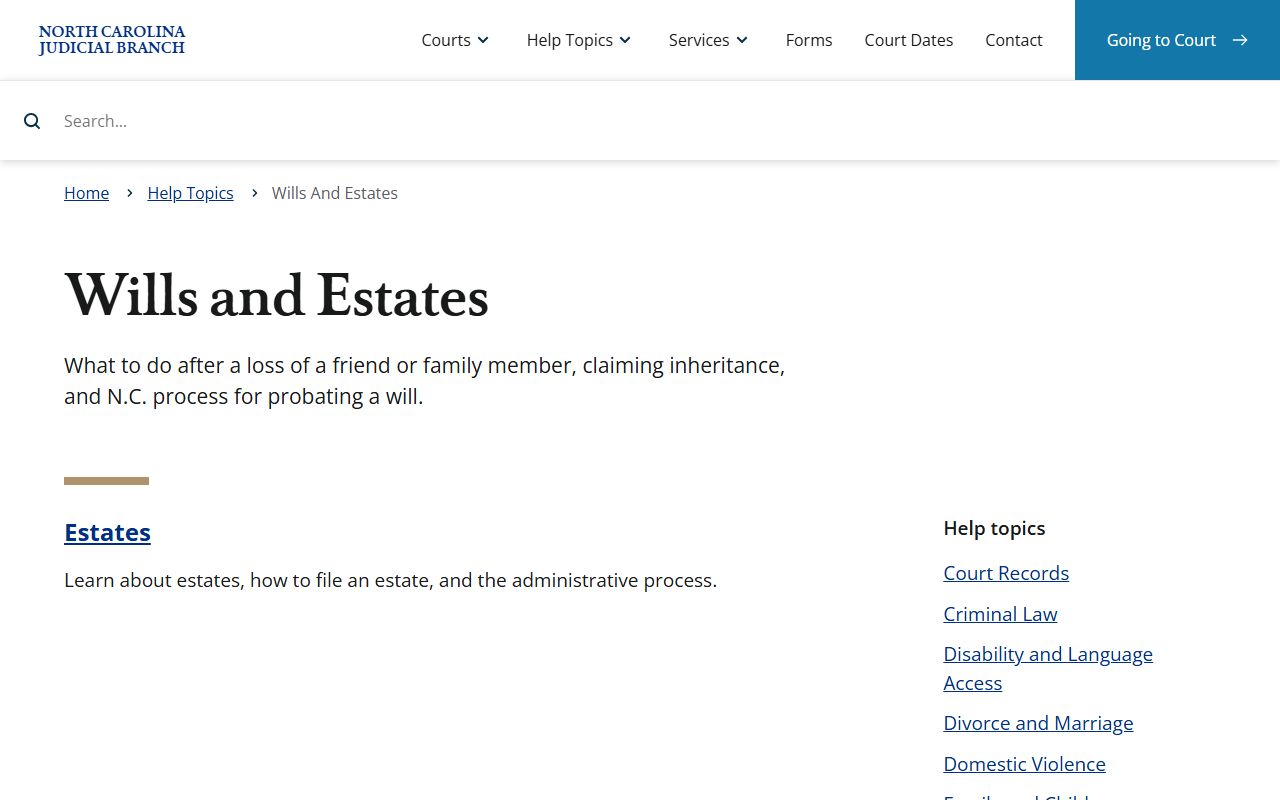
That statewide context matters because Wake County uses the North Carolina clerk probate model rather than a separate county probate court.
Open Wake County Estate Records
Opening an estate starts with the Clerk of Superior Court, Estates Division. A filer should gather the death certificate, the original will if one exists, contact information for heirs and beneficiaries, an estimate of estate property, and the proposed personal representative's information. The clerk determines which estate path fits the facts. Common routes include full administration, summary administration, collection by affidavit, or other small estate procedures when allowed by North Carolina law.
Wake County also uses an online appointment scheduler for estates. The Wake Estates Division appointment scheduler says phone appointments are encouraged because of high volume and asks for enough information to help determine the type of estate. That appointment tool is not the probate record itself. It is a scheduling channel for the clerk's estate intake process.
- Identify the county connection. Use Wake County if the decedent lived in Wake County or if the estate property makes Wake the proper venue.
- Collect the death certificate, original will, names and addresses of heirs, and asset information before contacting the Estates Division.
- Book an estate appointment or call the Estates Division to confirm which estate form path is likely to apply.
- File the required AOC estate forms with the Clerk of Superior Court and pay the filing fee that applies to opening the estate.
- After appointment, use clerk records, receipts, inventories, accountings, and orders to track the estate file until closing.
The Wake Estates Division appointment scheduler supports phone and intake appointments for Wake County probate records work.
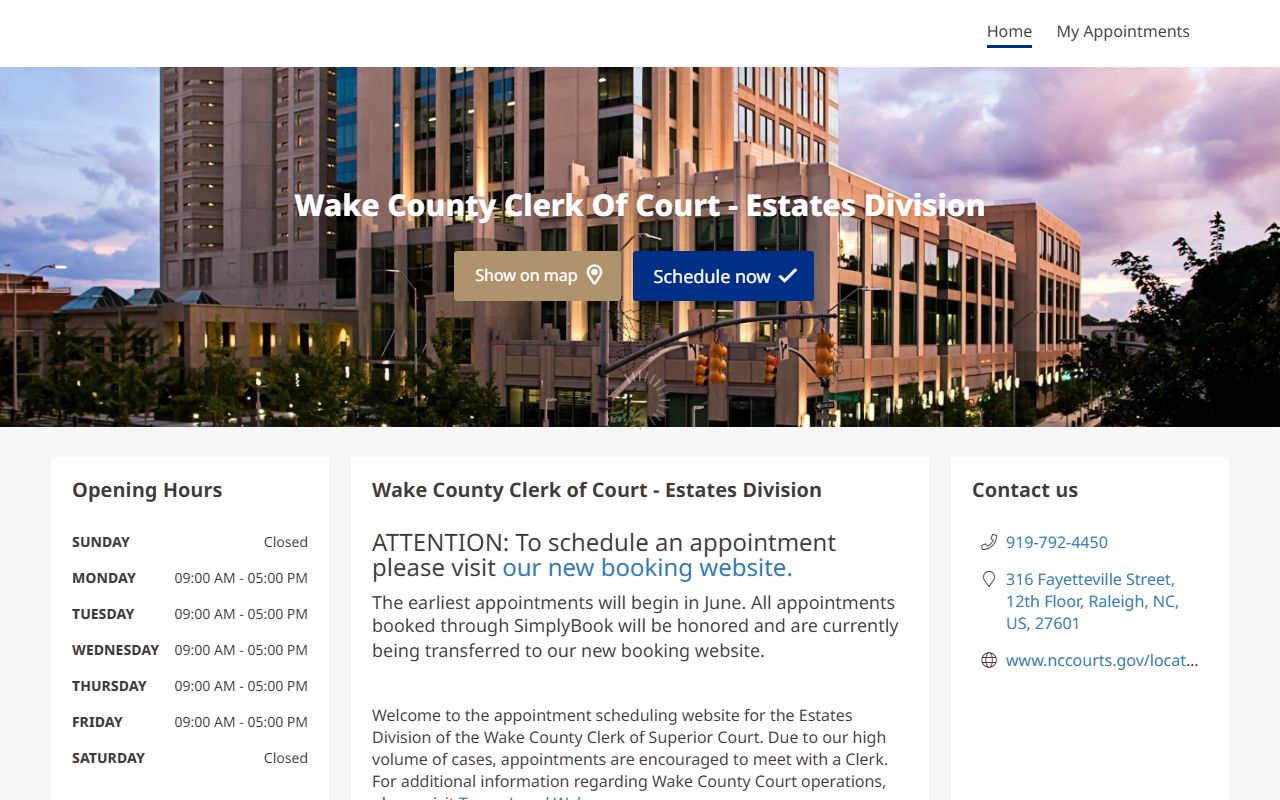
The scheduler helps route estate questions before a formal file is complete, especially when the right estate type is unclear.
Search Wake County Probate Records
Wake County probate records can be approached through several channels. Some estate case information may appear through the statewide N.C. eCourts Portal, and public self-service terminals in clerk offices remain an official search path for estate case information. The complete file is still viewed at the clerk's office in the county where the estate is located. For Wake County estate files, that means the Wake County Clerk of Superior Court.
Searches work best with the decedent's full name, estate case number if known, filing year, and the name of a personal representative. Older files, paper files, restricted filings, and certified copies may require clerk assistance. Estate papers may include a will, application, oath, letters, inventory, accounting, creditor notices, receipts, and closing documents. Guardianship and special proceeding files may overlap with estate work, but access can be more limited when a minor, incompetent adult, medical issue, or sealed order is involved.
| Access channel | Use it for | Wake County note |
|---|---|---|
| eCourts Portal | Searching visible estate case information | Use party or case details where Portal search fields allow. |
| Public terminal | Estate, civil, special proceeding, and clerk case searches | Terminals are available through clerk offices. |
| Paper file review | Complete estate file review | View at the Wake County clerk office where the file is kept. |
| Certified copy request | Legal-use copies of wills, letters, or orders | Request from the Clerk of Superior Court; fees apply. |
| Appointment scheduler | Estate opening and intake questions | Phone appointments are encouraged by the Wake booking page. |
Note: Portal search access does not replace certified letters, clerk-issued copies, or direct review of the Wake County paper estate file.
Wake County Probate Forms And Fees
North Carolina publishes estate forms through the Judicial Branch. The estate forms list includes AOC-E forms for probate, affidavits, certificates, notices, inventories, accountings, receipts, and related estate administration tasks. The correct form depends on whether there is a will, whether the estate qualifies for a smaller process, who is applying, and whether the filing concerns guardianship or a special proceeding.
Fee details should be checked against the current court fee schedule before filing. The statewide estates help topic gives a $120 filing fee for formally beginning estate administration. Wake payment information also states that civil, family, special proceeding, and estate payments are handled at the Wake County Courthouse, while criminal and traffic payments are handled at the Justice Center.
| Item or payment channel | Amount or rule | Source detail |
|---|---|---|
| Estate opening filing fee | $120 | Listed by the N.C. Judicial Branch estates help topic. |
| Civil, family, special proceeding, and estate payments | Paid at the Courthouse | Wake payment rules split civil/estate payments from criminal/traffic payments. |
| In-person payment types | Cash, credit/debit with processing fees, money order, certified check | Personal checks are not accepted for in-person court payments. |
| Copies of court documents | Fee applies | Exact copy and certification fee depends on document type and court fee schedule. |
The N.C. Judicial Branch estate forms list supplies Wake County probate records forms used by the clerk's office.
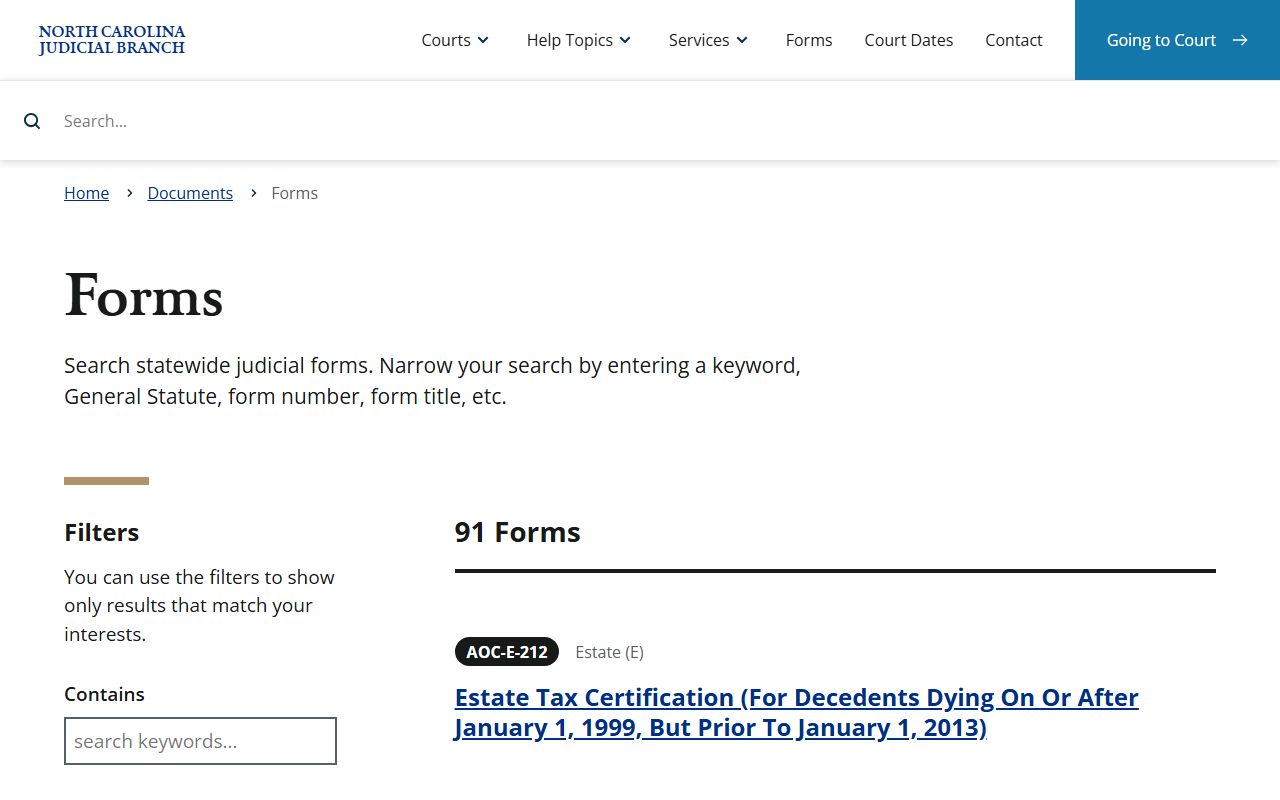
Using current AOC estate forms helps avoid rejected filings or a return trip to the Wake County Estates Division.
Wake County Probate Terms
Probate filings use terms that are more precise than everyday language. A short glossary helps separate the person who died, the person who files, the person appointed by the clerk, and the type of court authority being requested. North Carolina may also use "personal representative" as a broad term for a fiduciary appointed to act for the estate.
- Testator
- A person who made a will before death.
- Executor
- The person named in a will and appointed to carry out estate duties.
- Administrator
- A person appointed when there is no will or no named executor can serve.
- Intestate
- Dying without a valid will, so distribution follows state law.
- Guardianship
- Court-supervised authority over a minor, incompetent adult, or estate property.
- Letters
- Clerk-issued proof that a personal representative has authority to act.
What Wake County Probate Records Show
Wake County probate records can show the decedent's name, date of death, file number, type of estate, applicant, heirs, devisees, personal representative, bond, estate assets, creditor notices, inventories, accountings, distributions, receipts, orders, and closing entries. A will file may include the original will and proof of probate. A small estate file may contain an affidavit and supporting documents instead of a full administration file.
Not all probate-related records are open in the same way. Estate files are generally part of the clerk record system, but guardianship files, adoption issues, mental-health material, minor information, protected personal identifiers, sealed orders, and some financial details may be restricted or redacted. If a probate record is needed for court, title, banking, or estate administration, request a certified copy from the Clerk of Superior Court rather than relying on a downloaded or screen-viewed result.
The N.C. estates help topic explains the state process behind Wake County probate records and estate administration.
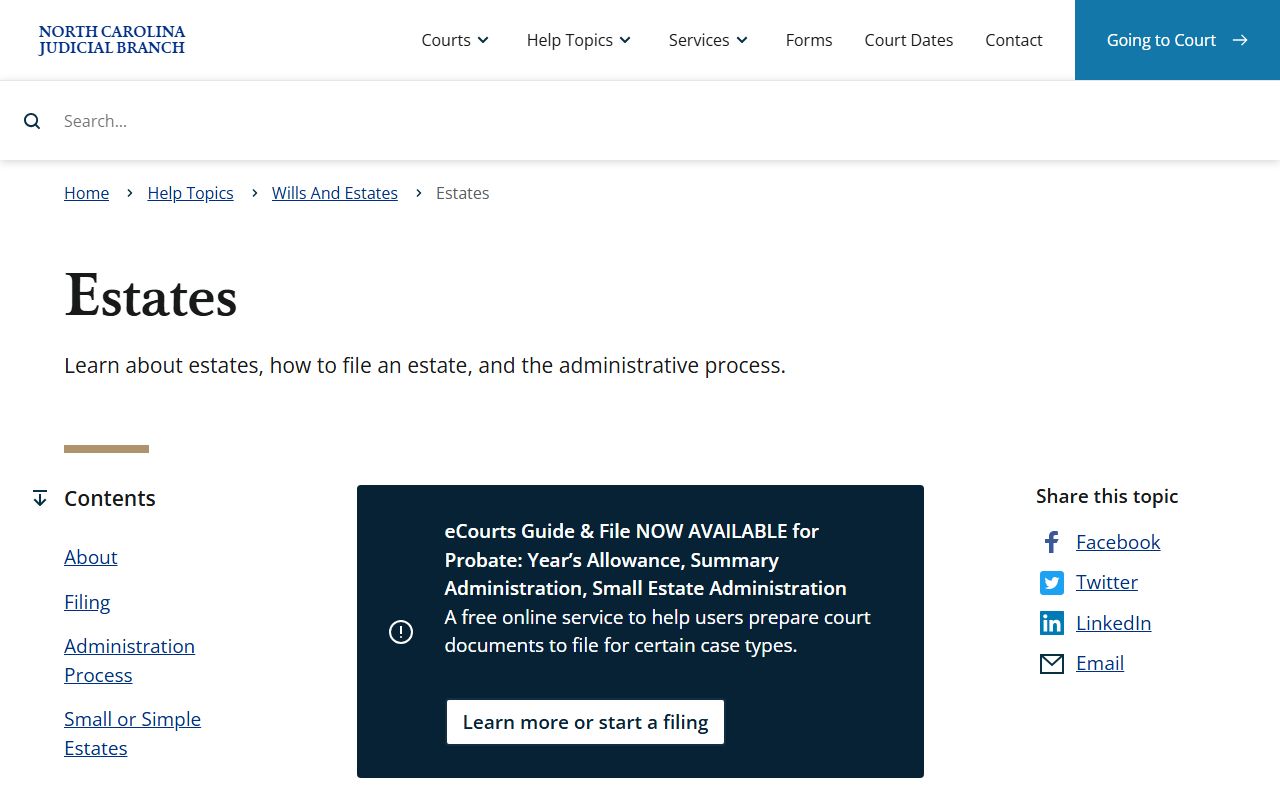
The estate help material is useful when a Wake County file search turns into an opening, inventory, or closing task.